
Last updated November 15, 2026
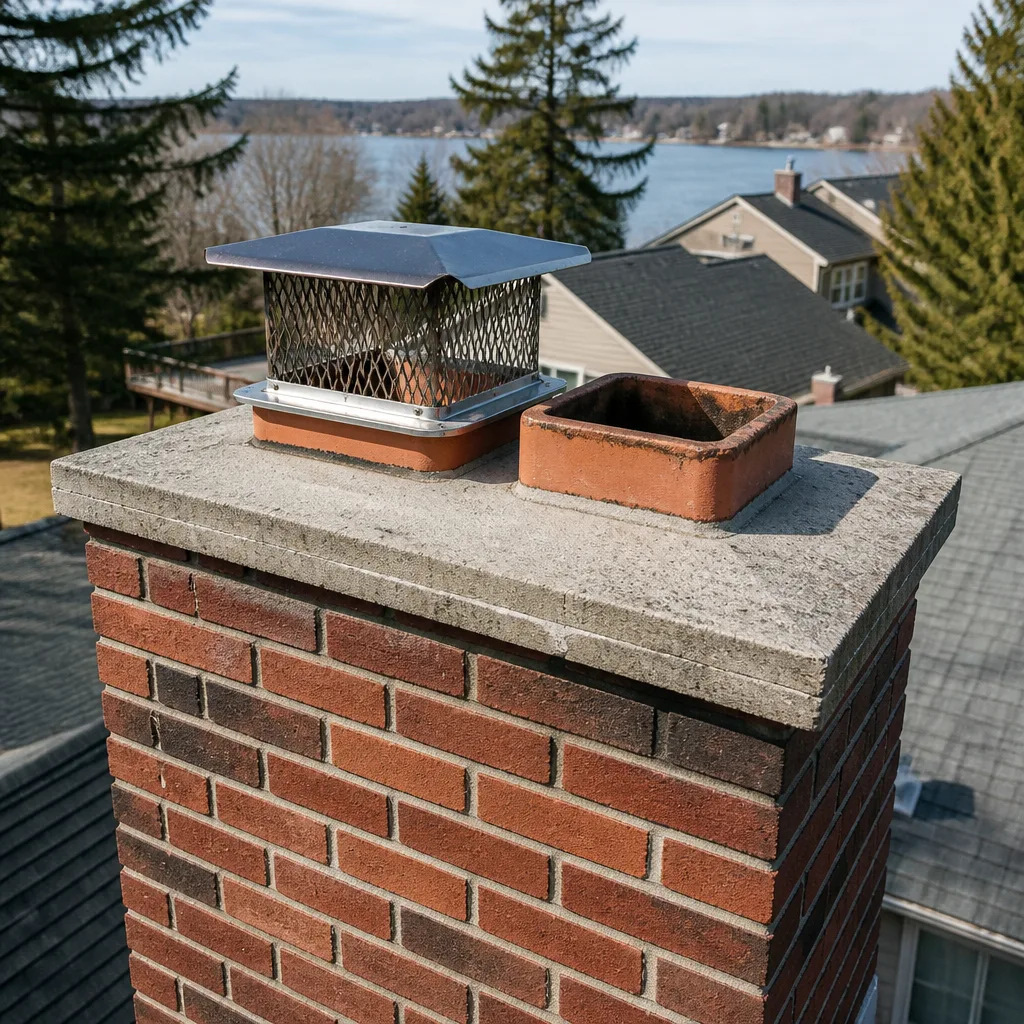 Sweep & inspection
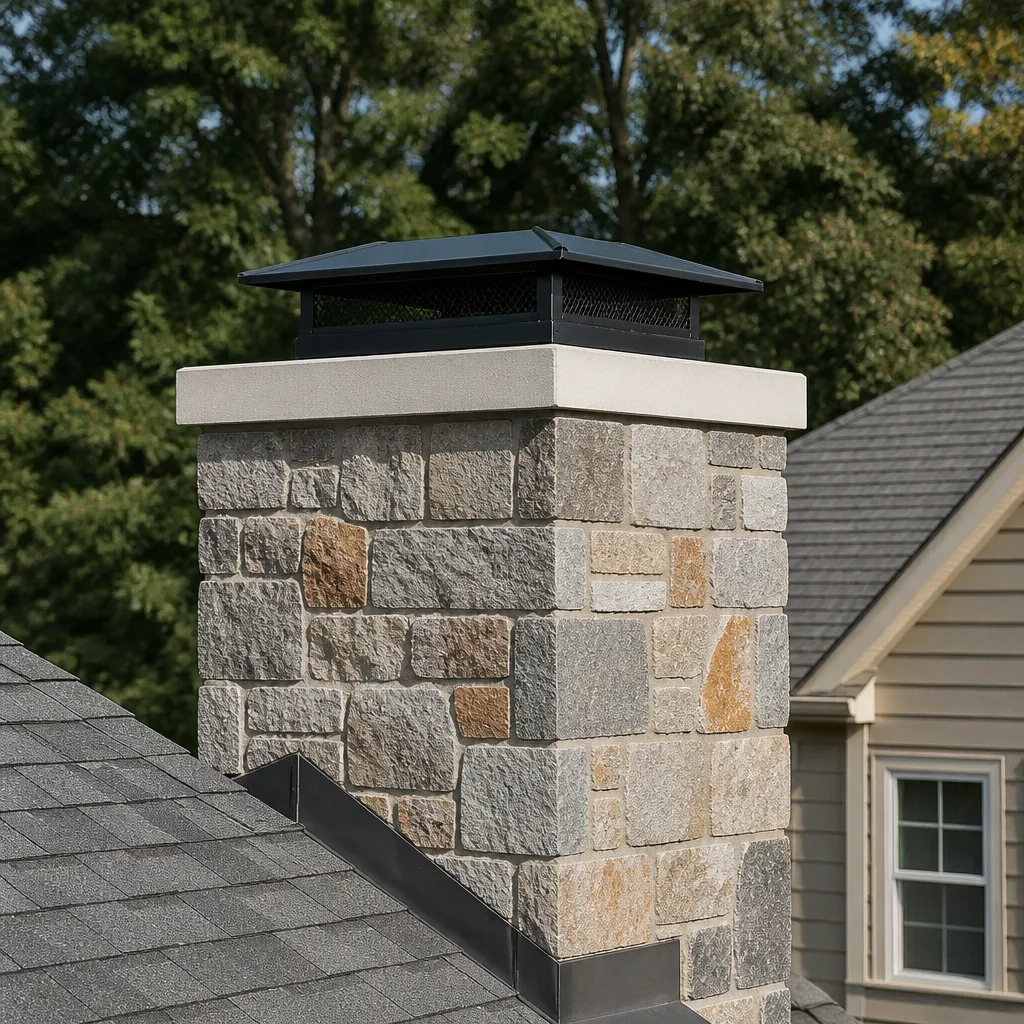 Caps & crowns
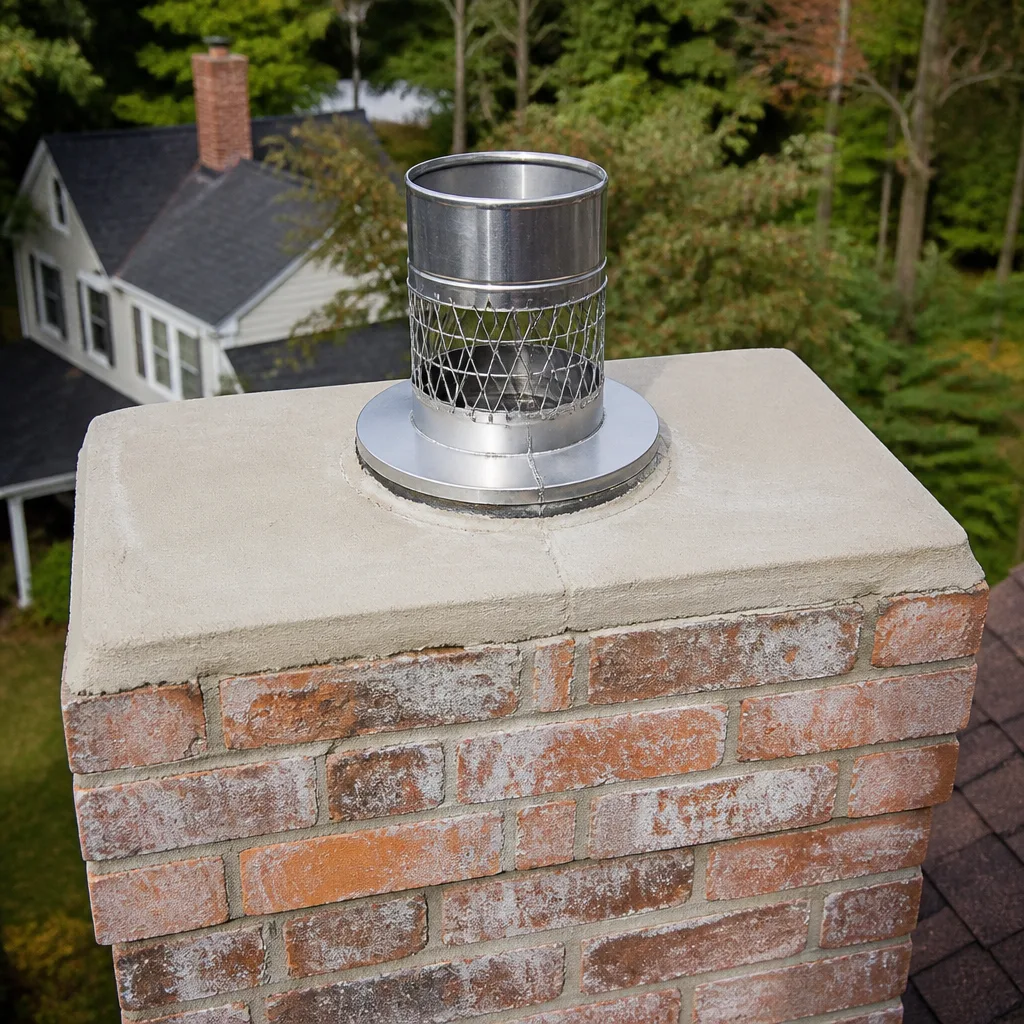 Flue relining
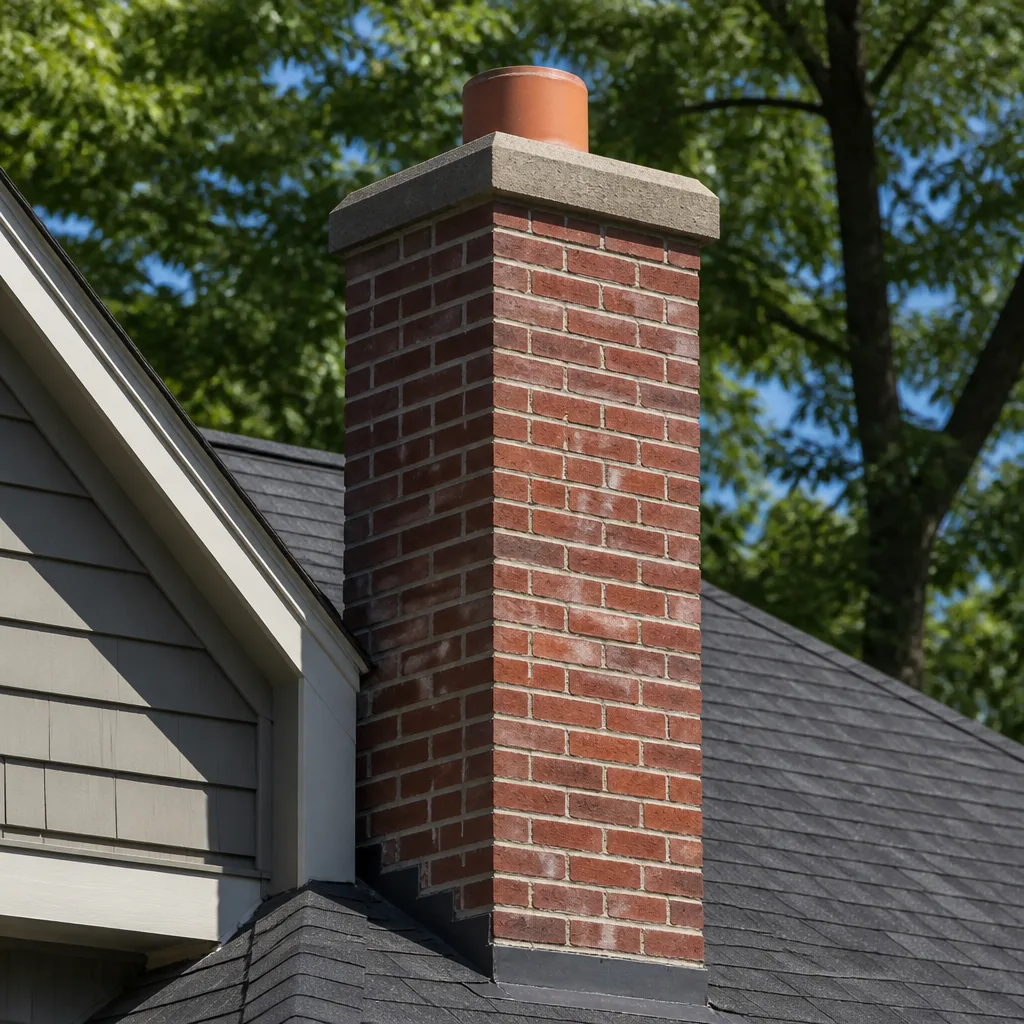 Masonry repair
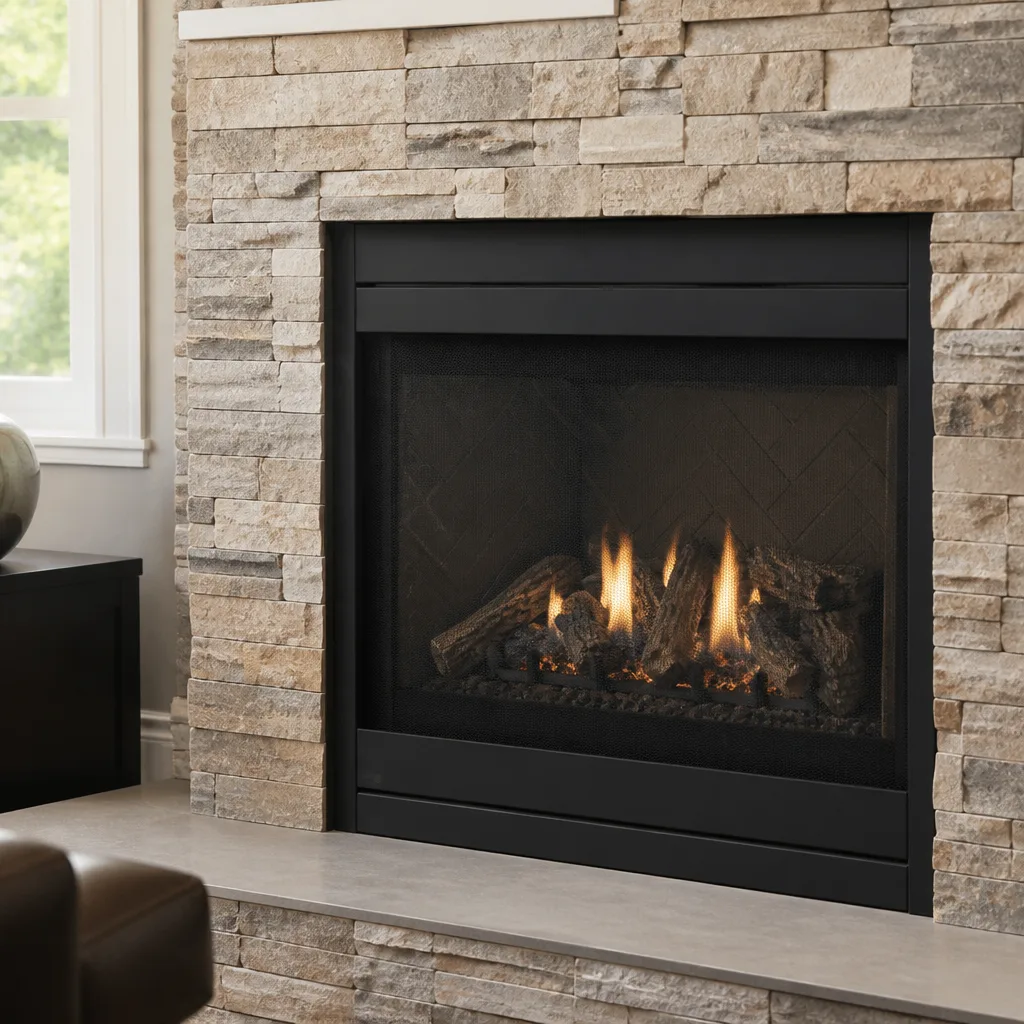 Gas fireplace service
Level 1 sweep and inspection to the NFPA 211 annual standard - flue, crown, cap, and flashing checked and photographed
Chimney sweep logs do not sweep chimneys. They loosen some creosote - which then falls where a brush and vacuum still have to collect it.
DIY vs Professional Chimney Cleaning: The Tallahassee Homeowner’s Decision Guide
You can buy the same brushes a chimney sweep uses. What you can’t replicate is knowing whether what you’re looking at inside the flue is stage-1 creosote you removed or stage-2 creosote that looks clean but isn’t, and that distinction is where house fires start. Most homeowners in Tallahassee who ask about DIY sweeping are really asking a cost question. The honest answer is that cost is the least interesting part of the decision. What matters more is what a brush alone cannot tell you about your liner, your flue’s structural condition, and the actual combustion risk sitting above your firebox. This guide covers exactly what DIY can accomplish, where it quietly fails, how your home’s chimney profile changes the math, and what the real cost comparison looks like when you account for equipment, time, and the diagnostics you’ll never see with a consumer kit.
Quick Answer
DIY chimney cleaning is adequate only for light, routine soot removal in a straight flue with a known-good liner, and only if you can inspect the flue yourself with a camera. It is not adequate for creosote beyond stage 1, for liner assessment, for structural evaluation, or for any chimney you haven’t had professionally inspected. For most Tallahassee homeowners, a professional sweep and inspection costs less than the equipment and risk of a DIY attempt, and it produces a documented condition report you can use for insurance and resale.
Styles & brands we work with
- Sweep & inspection
- Caps & crowns
- Flue relining
- Masonry repair
- Gas fireplace service
Table of Contents
- What DIY Chimney Cleaning Can Actually Accomplish
- Where DIY Fails: The Diagnostic Gap
- How Your Tallahassee Home’s Chimney Profile Changes the Math
- The Equipment Gap: Rotary Systems and Video Inspection
- Florida Insurance and Liability Implications of DIY Work
- The Real Cost Comparison
- Step-by-Step: How a Professional Sweep and Inspection Actually Works
- How to Decide for Your Own Chimney
What DIY Chimney Cleaning Can Actually Accomplish
DIY chimney cleaning removes loose, dry soot and light ash from the flue walls and smoke chamber. That’s it. In a chimney that has been swept regularly and burned seasoned hardwood, that removal is genuinely useful and a homeowner with the right brushes, drop cloths, and a proper ladder can do it safely on a single-story, straight-run flue. The work is physical but not complicated: brush down from the top, brush up from the firebox, vacuum with a HEPA shop vac rated for fine ash, and clean the smoke shelf.
What DIY reliably handles:
- Loose soot removal from flue walls after a season of burning
- Ash cleanup in the firebox and on the smoke shelf
- Cap and crown debris clearing (leaves, twigs, bird nests near the top)
- Visual surface checks of the firebox and damper from inside the home
What DIY does not handle, even when the homeowner is careful and methodical:
- Creosote classification beyond what the eye can judge
- Liner integrity assessment (cracks, gaps, separated joints)
- Flue tile condition and mortar joint erosion
- Smoke chamber and damper frame deterioration
- Chase cover, crown, and flashing condition at the roofline
- Draft measurement and combustion appliance venting checks
- Documented condition reporting for insurance or real estate
In our experience across Tallahassee homes, the calls that start with “I swept it myself and it still smells” almost always trace back to one of the items in the second list. The brush did its job. The homeowner just didn’t have the means to see the problem the brush passed right over.
Where DIY Fails: The Diagnostic Gap
The core problem with DIY chimney cleaning isn’t the sweeping. It’s that sweeping without inspection is a blind task. You remove what you can reach and assume the rest is fine. But creosote has three recognized stages, and only the first is safe to treat casually.
Stage 1 creosote is flaky, dry, and easy to brush away. It looks like soot and ash. If your chimney has only stage 1 buildup, a brush pass genuinely clears it.
Stage 2 creosote is the problem. It’s a hardened, tar-like glaze that adheres to the flue wall. A consumer brush may scrape the top layer and leave the glaze behind. The flue looks clean from the firebox. It isn’t. Stage 2 creosote is a leading contributor to chimney fires, and it’s the stage most commonly found in chimneys that have gone two or more seasons without a proper sweep.
Stage 3 creosote is a dense, puffy, fuel-rich deposit that requires specialized removal. No DIY approach touches it.
Here’s where the diagnostic gap becomes a safety issue. A homeowner sweeping their own flue has no reliable way to know:
- Which creosote stage they’re looking at
- Whether the flue liner has a hairline crack the brush just passed over
- Whether the flue tiles are spalling from heat stress
- Whether the smoke chamber has a failing parging layer
- Whether the damper is sealing correctly
A chimney fire needs three things: fuel (creosote), oxygen, and ignition temperature. A homeowner who sweeps the visible soot and leaves stage 2 glaze has removed one fuel source while leaving the more dangerous one in place. The chimney looks clean. It isn’t. And the homeowner has no way to know the difference without a camera and the trained eye to interpret what it shows.
The same logic applies to carbon monoxide. A wood-burning fireplace with a compromised liner or a blocked flue can spill CO into living space. That risk isn’t visible from the hearth. It’s only visible with inspection equipment and a trained read of the results.
This is why we say the real debate isn’t DIY versus professional cleaning. It’s DIY cleaning versus professional inspection. The cleaning is the easy part. The inspection is why the visit exists.
How Your Tallahassee Home’s Chimney Profile Changes the Math
Not every chimney in Tallahassee carries the same DIY risk. Some profiles are more forgiving than others. Here’s how to assess yours.
Age and construction type
Homes built before the 1980s often have masonry chimneys with clay tile liners that have had decades of thermal cycling. Those tiles crack, and the mortar joints between them erode. A cracked flue tile is a direct pathway for heat and CO into the surrounding structure. If your home is older than roughly 40 years and the chimney hasn’t been professionally inspected in recent memory, DIY sweeping gives you a false sense of security on a system that needs eyes on it.
Homes built from the 1990s forward more often have factory-built or prefabricated chimney systems with stainless liners. Those systems are more predictable, but their liners still develop joint separations and their caps and terminations still fail. A prefab system with a separated liner section looks normal from the firebox and is not safe to burn.
Fuel type
Wood-burning fireplaces and wood stoves produce creosote and are the highest-risk category for DIY. If you burn unseasoned wood or burn frequently with the damper partly closed, you’re generating stage 2 creosote faster than you’d expect.
Gas fireplaces produce far less creosote but introduce a different risk: venting and combustion. A gas appliance that isn’t drafting correctly can spill combustion byproducts into the room. That’s not something a brush solves, and it’s not something a homeowner can check without a draft gauge and a CO analyzer.
Pellet stoves sit in between. They produce less creosote than wood but generate fine ash that packs into venting in ways that need proper extraction, not just a brush pass.
Chimney configuration
A straight, vertical flue on an exterior wall is the easiest to sweep and the easiest to inspect. An interior chimney with an offset, a smoke chamber transition, or a fireplace insert installed inside the firebox is far harder. Inserts in particular hide the firebox-to-flue transition, and that’s exactly where creosote accumulates and where DIY access fails.
Tallahassee’s burn season
Tallahassee’s winters are mild, which means most homeowners here burn for a shorter season than in colder climates. That’s a mixed blessing. Fewer burn hours means slower creosote accumulation, but it also means a chimney can go two or three years between sweeps without the homeowner noticing a problem, and by then stage 2 glaze has had time to set. Mild winters also mean chimneys sit idle for long stretches, which is when animals nest, caps degrade, and moisture works into masonry. A chimney that “worked fine last winter” is not evidence that it’s safe this winter.
If you’re trying to decide whether your specific chimney is a DIY candidate, a chimney sweep visit that includes inspection is the fastest way to get a real answer rather than a guess.
The Equipment Gap: Rotary Systems and Video Inspection
The equipment difference between a consumer brush kit and a professional setup isn’t a matter of degree. It’s a different category of tool. Here’s what professional-grade equipment does that a homeowner’s kit cannot.
Rotary cleaning systems
A consumer chimney brush is a stiff-bristled head on a flexible rod. It scrapes the flue wall and knocks loose soot free. It does not remove glazed creosote. Professional rotary systems use a spinning head driven by a drill or motor, with interchangeable whip and chain heads that abrade the flue wall and break up stage 2 glaze. Some setups pair the rotary action with a chemical pretreatment that softens the glaze before mechanical removal. That’s the difference between sweeping a chimney and restoring it.
Video inspection cameras
This is the single biggest equipment gap. A professional chimney inspection uses a camera on a flexible rod fed down the flue, with a monitor that lets the technician and the homeowner see the entire liner from top to bottom. Cracks, gaps, spalling, and glaze are visible on screen. A homeowner with a flashlight and a mirror sees maybe the top two feet of the firebox and none of the flue above the smoke shelf.
The camera is also the reason a professional inspection can tell you, with evidence, whether you need a repair or not. Nothing gets recommended on our inspections without camera footage the homeowner has already seen. That’s not a sales line. It’s the difference between an opinion and a finding.
Specialty repair materials
When a sweep reveals a problem, the fix depends on having the right product on hand. We work with HeatShield for ceramic resurfacing of compromised liners, DuraFlex for flexible stainless liner systems, and Gelco and Famco for caps and venting components. These are industry-standard professional lines, not hardware-store substitutes. A homeowner attempting a DIY repair on a cracked flue typically ends up with a caulk-and-hope solution that fails within a season, and the failure happens inside a system they can’t see.
Containment and air quality
Sweeping generates a lot of fine ash. Professional setups use canvas drop cloths, negative-air machines, and HEPA filtration to keep soot out of the living space. A homeowner with a shop vac and a tarp will get most of it, but fine ash distributes through a house in ways that show up days later on every horizontal surface. In a tight, modern Tallahassee home, that’s a real annoyance to clean up.
Florida Insurance and Liability Implications of DIY Work
This is the section most DIY guides skip, and it’s the one that can cost a homeowner the most. If a chimney fire or CO event happens after self-performed chimney work, your homeowner’s insurance carrier will investigate the cause. How that investigation treats your DIY work matters.
Florida homeowner policies generally require homeowners to maintain their property in good condition and to disclose known hazards. A chimney that has never been professionally inspected and was last swept by the homeowner is a chimney the insurer can argue was not maintained to a reasonable standard. That argument doesn’t automatically void a claim, but it creates an exposure the homeowner didn’t have before deciding to DIY.
More concretely:
- Documentation gap: A professional sweep produces a written condition report. A DIY sweep produces nothing. In a claim dispute, “I swept it myself” is not documentation.
- Code and permit questions: Sweeping doesn’t usually require a permit. Repairs and relining often do, and unpermitted work discovered after a loss can complicate a claim.
- Real estate disclosure: In a Florida home sale, a chimney with no inspection history is a negotiable issue. A documented inspection from a specialist resolves it. A homeowner’s assurance does not.
- Liability if you sell: If you DIY-swept a chimney and later sell the home, and the buyer’s inspector finds unrepaired damage, the disclosure conversation gets uncomfortable fast.
We’re not saying DIY sweeping voids your policy. That’s a question for your carrier, and we can’t answer it for you. We’re saying that the insurance and liability math is part of the DIY decision, and it’s usually left out of the cost comparison. A documented inspection is a small expense that resolves a large uncertainty.
If you want a formal condition report you can hand to an insurer or a real estate agent, our chimney repair and inspection service documents system condition in writing with photo evidence. That’s what an underwriter or a buyer actually wants to see.
The Real Cost Comparison
The usual comparison is “professional sweep fee versus zero dollars.” That’s not a real comparison. Here’s what the honest version looks like. Pricing is per job and set by a written estimate, so the figures below are the components to weigh, not quoted prices.
What the DIY side actually costs
| Item | What it involves | Cost reality |
|---|---|---|
| Brush kit and rods | Sized to your flue, plus extension rods for the run height | One-time purchase, but the wrong size is common and re-buying is frequent |
| HEPA vacuum | Rated for fine ash, not standard shop dust | Adds to the kit; household vacuums fail on this |
| Ladder and roof access | Safe access to the top of the flue | Real cost and real risk, especially on two-story homes |
| Drop cloths and PPE | Containment and respiratory protection | Modest cost, frequently skipped |
| Time | Sweep plus cleanup, realistically half a day or more | The largest unmeasured cost |
| Risk cost | The diagnostics you didn’t do | The one that matters and the one nobody prices |
What the professional side actually includes
- Sweep of flue, smoke chamber, and firebox
- Camera inspection of the full flue run
- Creosote staging and liner condition assessment
- Draft and venting check
- Written condition report with photos
- Repair recommendations only where the camera evidence supports them
The point of the table isn’t that DIY is secretly expensive. It’s that the DIY column is missing the row that matters. You can buy the gear for less than a professional visit in many cases, but you cannot buy the diagnostic capability, and the diagnostic capability is what determines whether your chimney is safe to burn. The comparison isn’t cost versus cost. It’s cost versus cost plus a blind spot.
For a clearer picture of what a professional visit costs in this market, our Tallahassee chimney sweep page lays out what a standard visit covers. Estimates are free, so the pricing question gets answered before anything is booked.
Step-by-Step: How a Professional Sweep and Inspection Actually Works
If you’ve never had a professional visit, here’s what the process looks like from the homeowner’s side. It’s less mysterious than it sounds, and it’s the same sequence whether we’re working on a masonry chimney or a prefab system.
- Walkthrough and questions. We ask about fuel type, burn frequency, how the fireplace has been behaving, and whether there’s been any smoke, odor, or draft issue. What you tell us guides where we look first.
- Containment setup. Drop cloths over the hearth area, negative-air or HEPA filtration running, tools staged. This keeps the living space clean.
- Camera inspection of the flue. A camera goes down the flue from the top and up from the firebox. We watch the monitor with you. This is where liner cracks, glaze, spalling, and joint separations show up.
- Sweep. Rotary cleaning of the flue, smoke chamber, and firebox. Stage 2 glaze, if present, gets pretreated and mechanically removed.
- Secondary inspection. After sweeping, the camera goes back down. This confirms the flue is clean and reveals anything the soot was hiding.
- Exterior check. Cap, crown, chase cover, and flashing at the roofline. These are common failure points and cheap to fix before they become water intrusions.
- Written report. Condition findings, photos, and any recommended repairs, with a note on which items can wait and which shouldn’t. Nothing gets recommended that the camera didn’t show you.
The whole visit typically runs an hour or two depending on the system and the buildup. You walk away with a documented condition rather than an assumption.
How to Decide for Your Own Chimney
Some Tallahassee homeowners genuinely are DIY candidates. Others are not. Here’s a simple decision framework.
You may be a reasonable DIY candidate if all of the following are true:
- Your chimney has been professionally inspected within the last two years
- The last inspection confirmed a sound liner with no cracks or gaps
- You burn seasoned hardwood only, and burn occasionally
- Your flue is straight and vertical with no insert or offset
- You have a camera you can run down the flue to check your own work
- You can safely access the roof and the flue top
You should have this done professionally if any of the following apply:
- You’ve never had the chimney inspected, or you can’t remember the last time
- You recently bought the home and don’t have inspection records
- You burn frequently, burn unseasoned wood, or use the fireplace as a primary heat source
- There’s a fireplace insert, a wood stove, or any appliance you didn’t install yourself
- You’ve noticed smoke spillage, a persistent odor, or draft problems
- You see visible deterioration at the firebox, damper, or roofline
- You have a gas appliance and any concern about venting
If your chimney is in the first category, there’s no harm in brushing between professional visits. If it’s in the second, the brush is solving the wrong problem. The decision isn’t really about sweeping. It’s about whether you have current, reliable information about the condition of your flue, and most homeowners in Tallahassee who are asking the question don’t.
Common Mistakes to Avoid
- Sweeping without inspecting. A brush pass with no camera check tells you nothing about liner condition. The flue can look clean and be cracked.
- Assuming “it looks clean” means it’s safe. Stage 2 creosote glazes the flue wall and can look like a smooth, clean surface. It isn’t clean, and it burns hot.
- Using the wrong brush size. An undersized brush skips the corners of a square flue. An oversized brush can damage clay tiles. Neither outcome is good.
- Skipping the roof-level check. Tallahassee’s afternoon storms and summer downpours are hard on caps, crowns, and chase covers. Water intrusion at the top is a common cause of interior damage that starts at the roofline, not the firebox.
- Ignoring a smell after sweeping. A persistent smoky odor after a DIY sweep usually means glaze remains or the smoke chamber needs work. It’s not a candle problem.
- Burning unseasoned wood to “use up” a pile. Green wood generates creosote faster than any other single factor. Season it first, and it doesn’t become a stage 2 problem.
- Attempting a liner repair with hardware-store products. Caulk and foil tape don’t survive inside a flue. A proper repair uses a system designed for the application, not a generic patch.
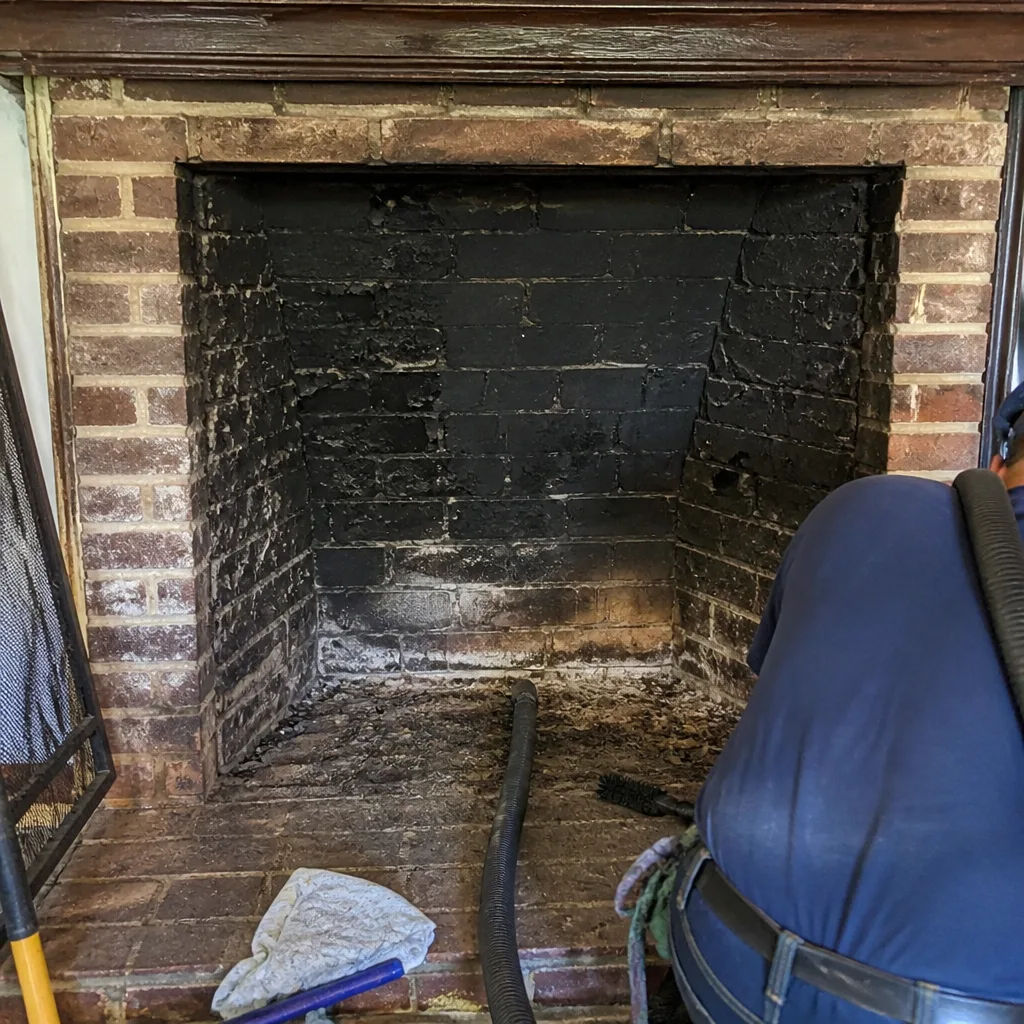
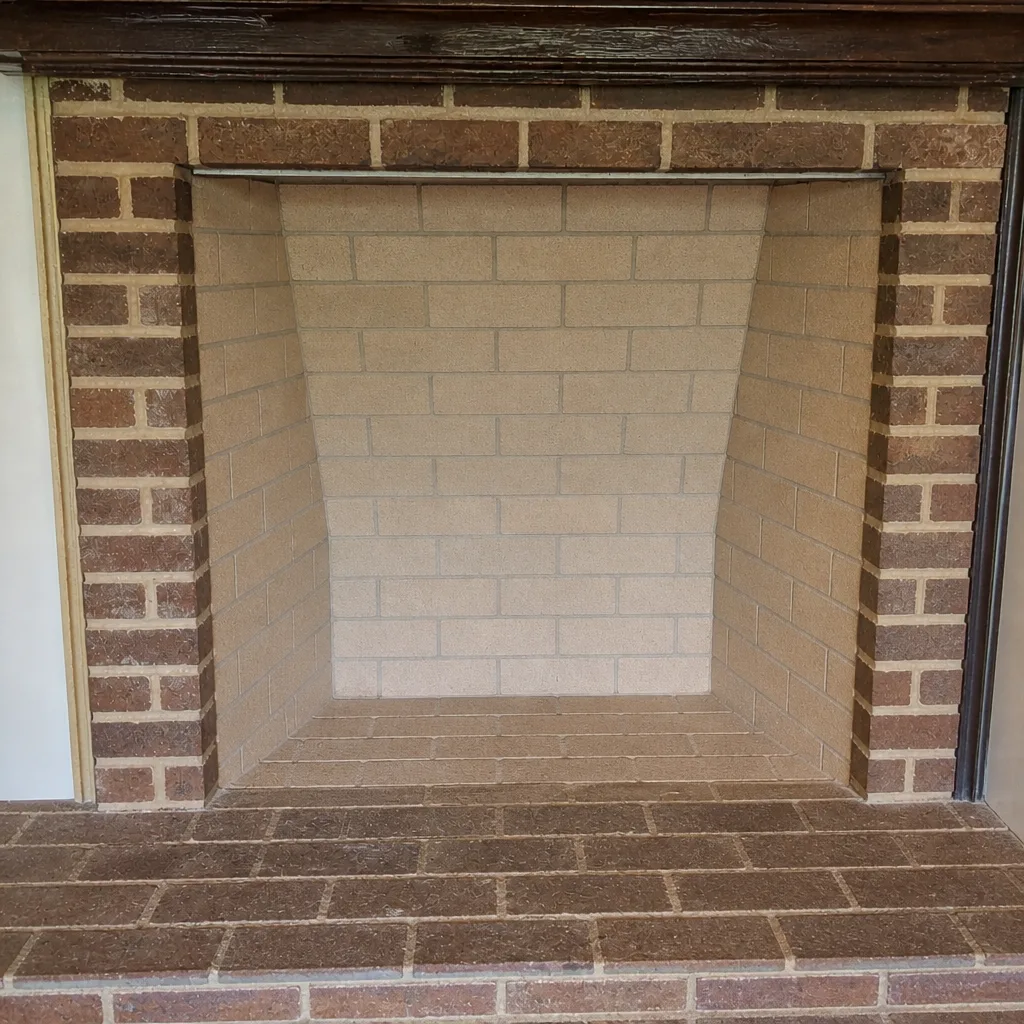
See the difference
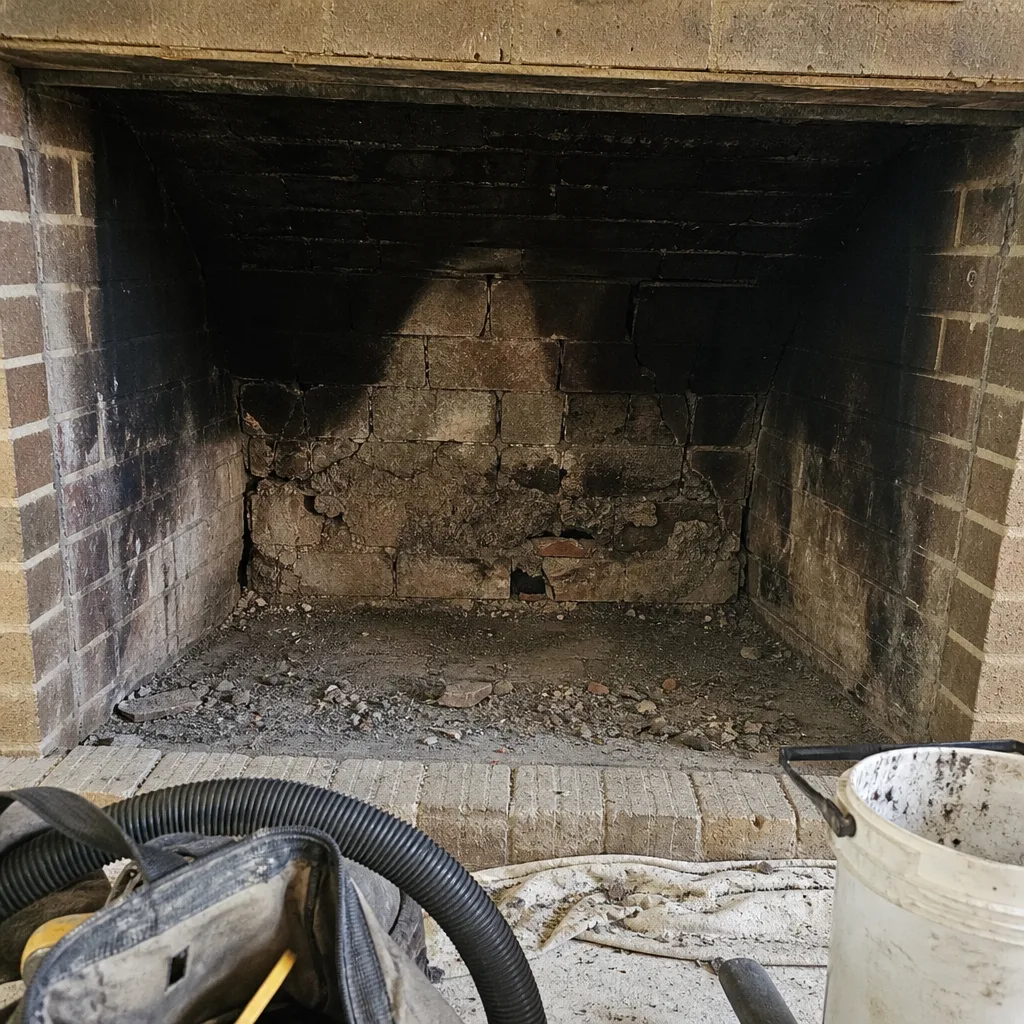 Before
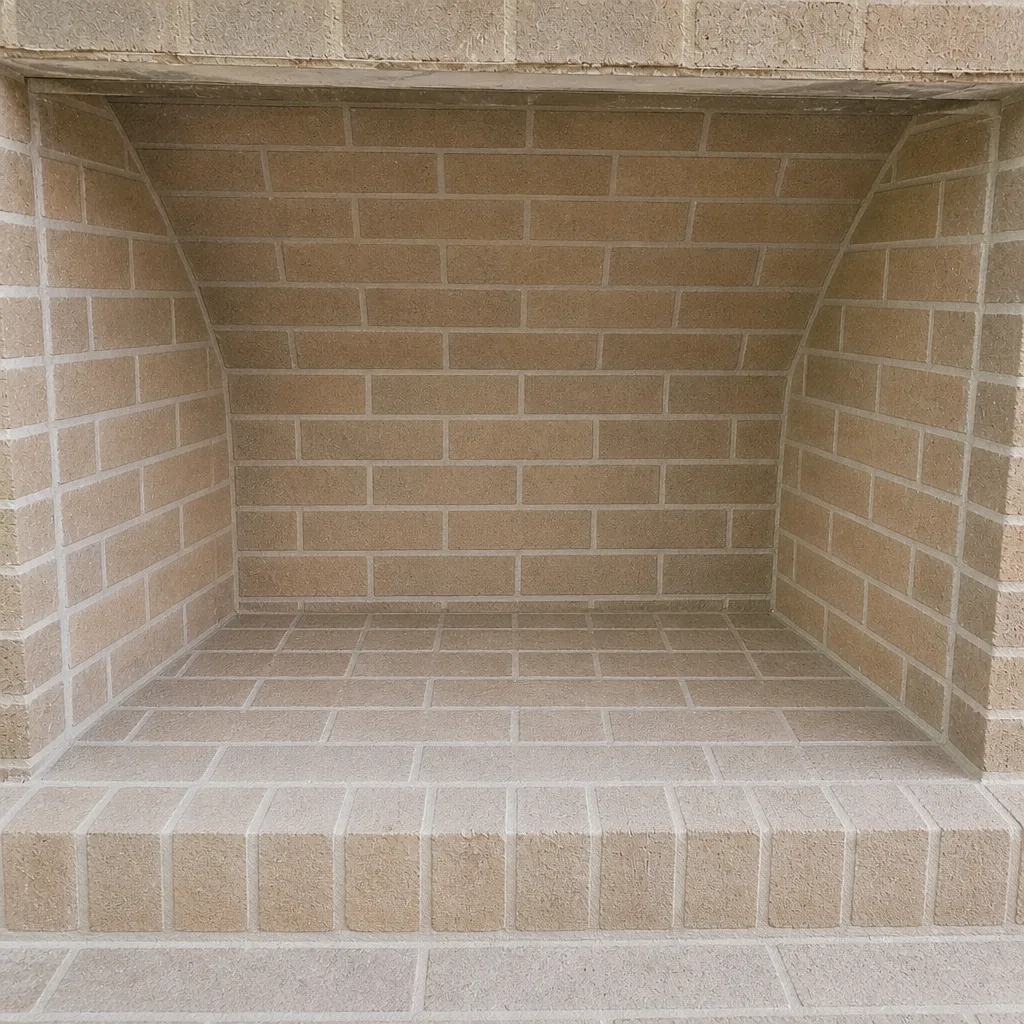 After
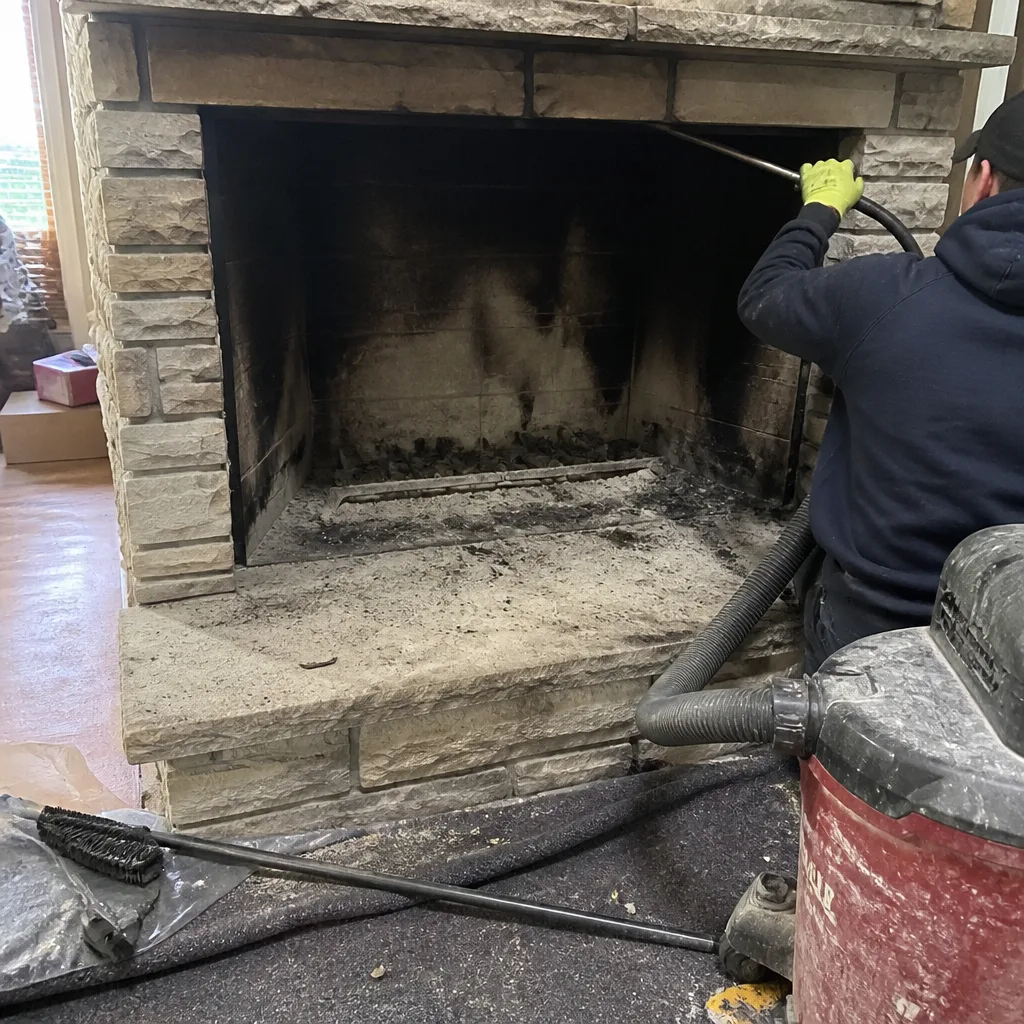 Before
 After
 Before
 After
When to Call a Professional
Call a professional if you haven’t had your chimney inspected in more than a year, if you’ve just bought a home with a fireplace and no inspection records, if you notice smoke spilling into the room, if there’s a persistent odor after burning, or if you can see cracks, spalling, or deteriorated mortar in the firebox or at the roofline. Also call if your chimney has an insert, an offset, or a prefab system you don’t have documentation for, because those configurations are where DIY access and DIY judgment both fail. Any of these situations means the brush alone can’t tell you what you need to know. Tallahassee Chimney Sweep offers free estimates in Tallahassee. Call (855) 904-4110 and we’ll walk you through what a visit covers and what it costs before anything is booked. We answer 24/7, and dispatch runs 7am to 7pm, Sunday through Friday.
For homeowners closer to the broader Tallahassee area, the same free-estimate process applies. Nothing gets recommended without camera evidence you’ve seen yourself, and we’ll tell you plainly when work can safely wait.
Frequently Asked Questions
You can sweep your own chimney if it has been professionally inspected recently, has a sound liner, and has only light stage 1 soot. You cannot reliably assess creosote stage, liner integrity, or structural condition without a camera and training. If any of those are unknown, have it inspected before you sweep. Call (855) 904-4110 for a free estimate.
Most wood-burning chimneys should be swept and inspected once a year, and more often if you burn frequently or use the fireplace as a primary heat source. Tallahassee’s short burn season doesn’t change the annual rule, because the inspection half of the visit is what catches liner and cap problems that have nothing to do with burn hours. Call (855) 904-4110 to book a visit.
Creosote accumulates, and at stage 2 it glazes the flue wall and becomes the fuel for a chimney fire. A blocked or damaged flue can also allow carbon monoxide to enter the home. Neither risk is visible from the firebox, which is why skipping the inspection matters more than skipping the sweep. Call (855) 904-4110 for an inspection that documents what’s actually inside your flue.
Your carrier may treat a self-maintained chimney differently than one with professional inspection records if a fire or CO event occurs. A written condition report from a specialist resolves that question in advance. We can’t speak for your insurer, but we can produce the documentation they typically want. Call (855) 904-4110 for a free estimate.
No. A standard consumer brush can knock off the top layer of glaze and leave the hardened tar behind, which is worse than nothing because it looks clean. Stage 2 removal needs rotary equipment and often a chemical pretreatment. That’s a professional job. Call (855) 904-4110 to schedule one.
You need a new liner when the camera shows cracks, gaps, or separated joints that compromise the flue. You don’t need one when the liner is sound. On our inspections, nothing gets recommended without camera footage the homeowner has already seen on the monitor, and we’ll tell you plainly when a repair can wait. Call (855) 904-4110 for an inspection with photo documentation.
The Bottom Line
The DIY chimney cleaning debate is usually framed as a cost question, and that framing hides the real issue. A homeowner can remove loose soot. A homeowner cannot reliably identify stage 2 creosote, assess liner integrity, or judge structural condition, and those three things are what actually determine whether a chimney is safe to burn. The equipment gap is real: rotary cleaning and video inspection see things a consumer brush kit cannot. The insurance and documentation gap is real too. And the cost comparison only makes sense when you include the diagnostics you’re not getting. If your chimney has been inspected recently and is sound, brush between visits. If it hasn’t, the brush is solving the wrong problem. Call (855) 904-4110 for a free estimate. We answer 24/7. Fast dispatch from 7am to 7pm, Sunday through Friday.
Written by the team at Tallahassee Chimney Sweep.