
Last updated November 15, 2026
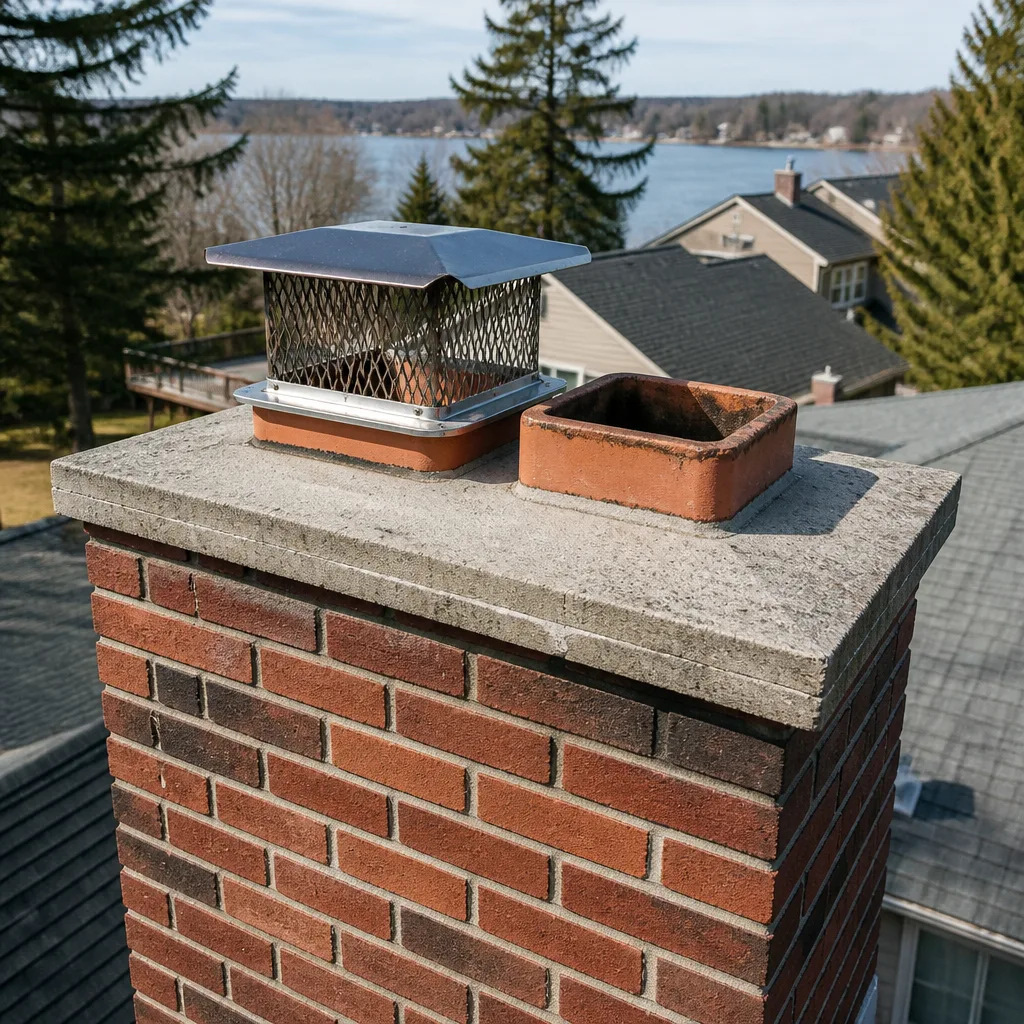 Sweep & inspection
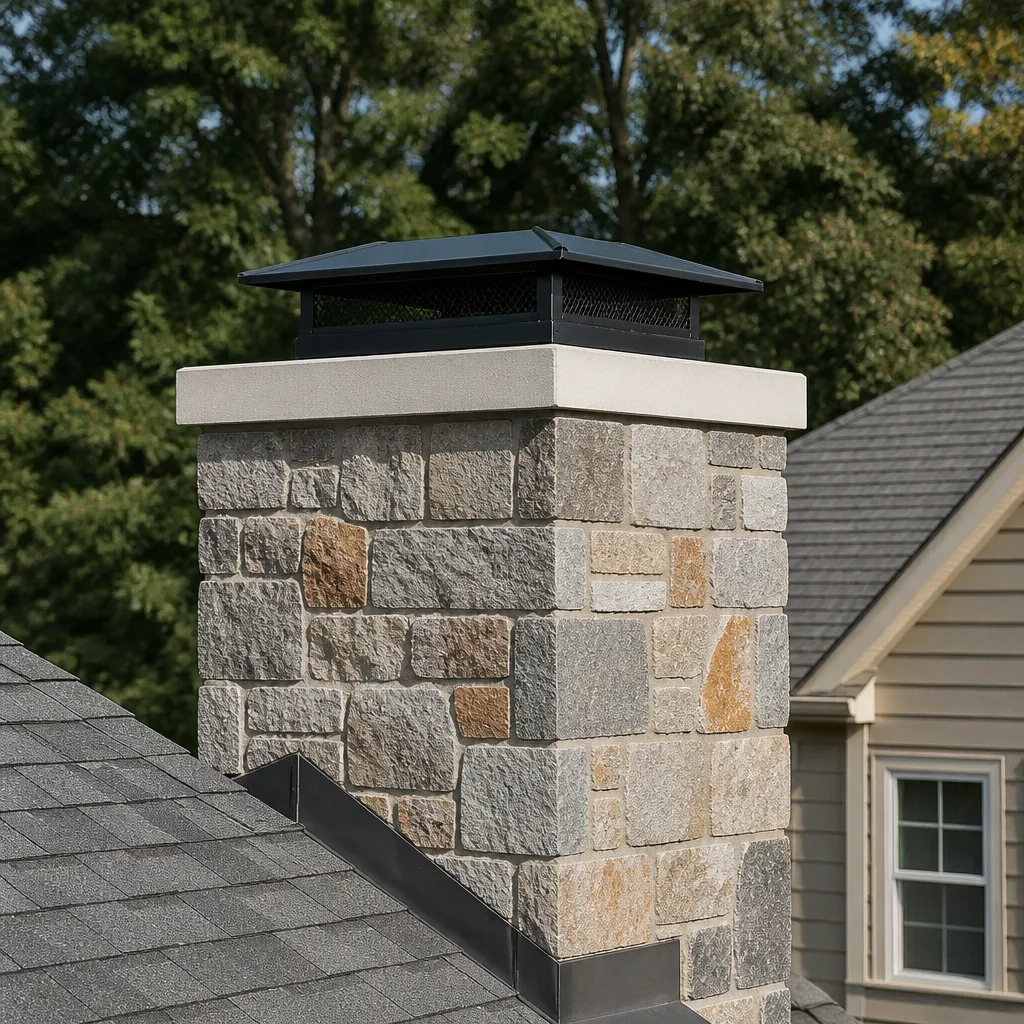 Caps & crowns
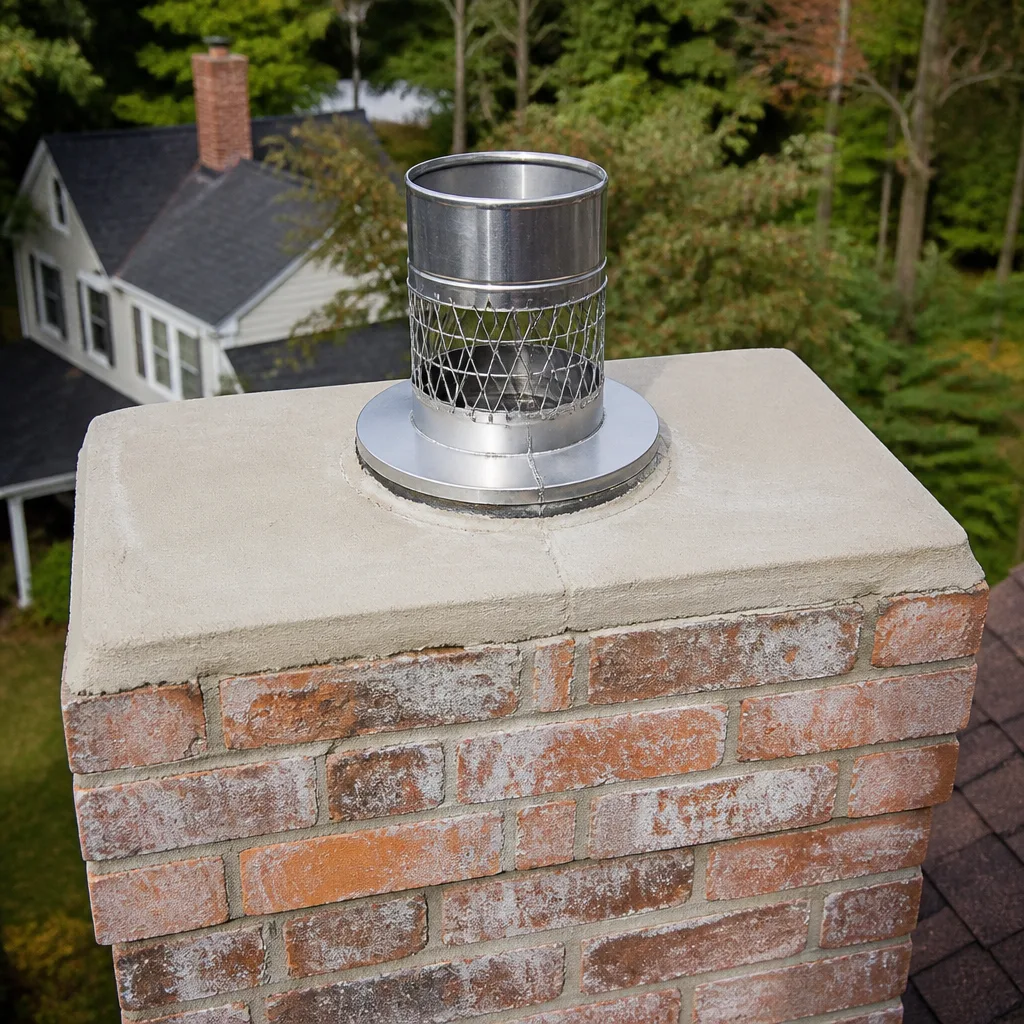 Flue relining
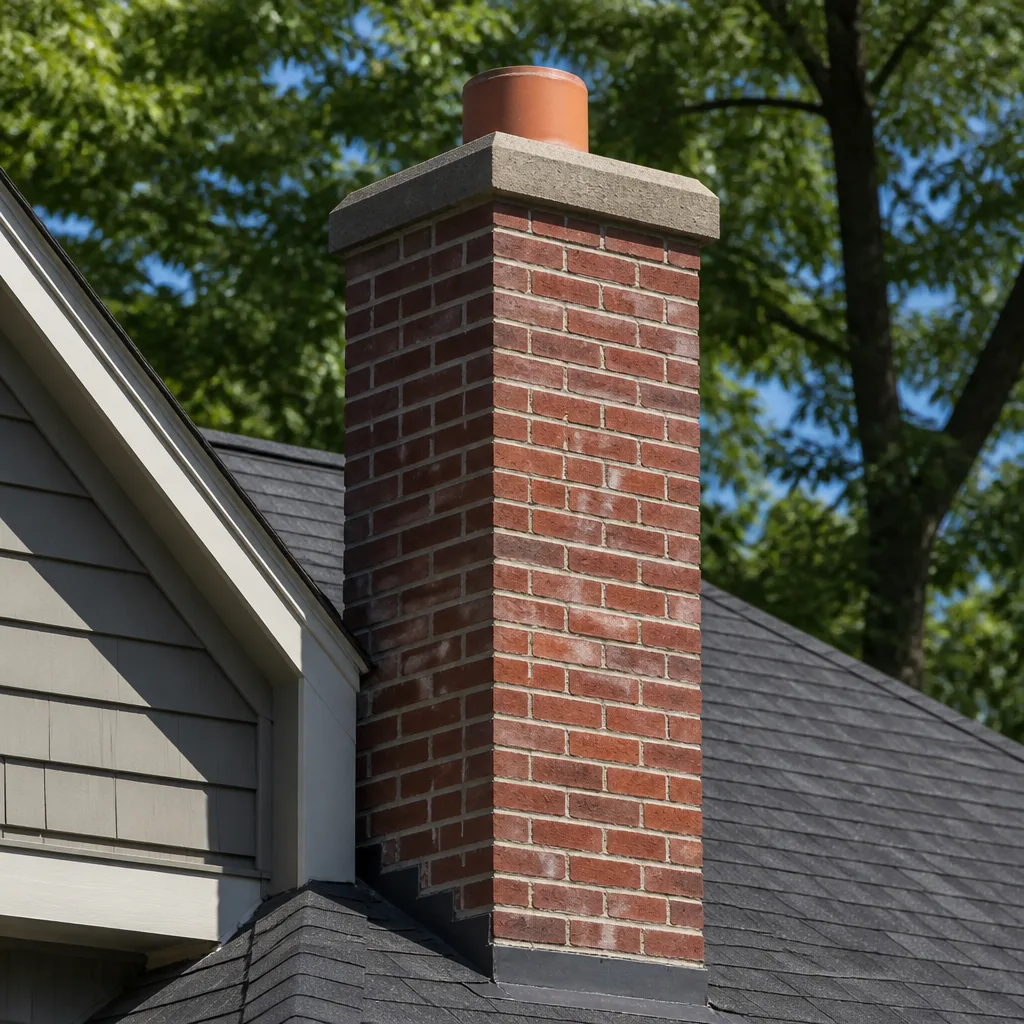 Masonry repair
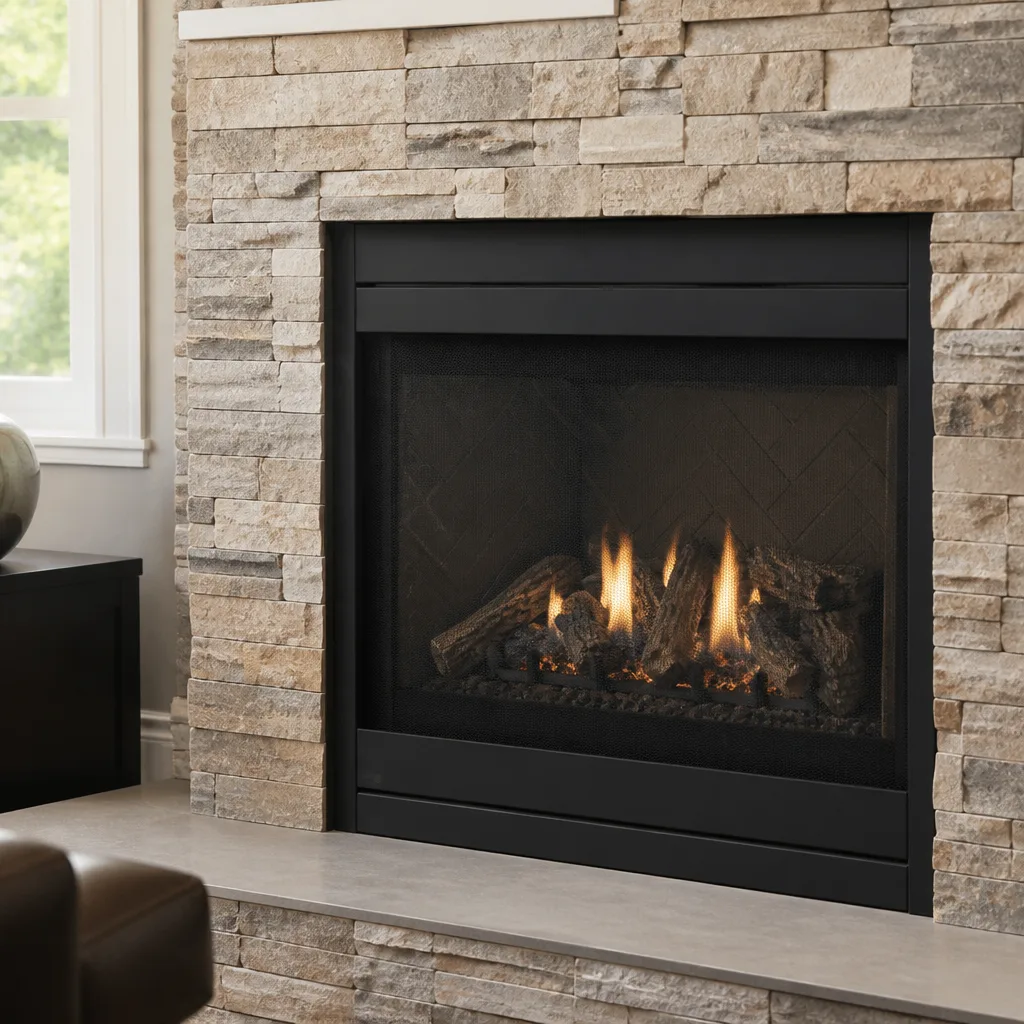 Gas fireplace service
Level 1 sweep and inspection to the NFPA 211 annual standard - flue, crown, cap, and flashing checked and photographed
Chimney sweep logs do not sweep chimneys. They loosen some creosote - which then falls where a brush and vacuum still have to collect it.
Chimney Cleaning Warning Signs: A Tallahassee Homeowner’s Reference Guide
By the time smoke is rolling into your living room, you’ve already missed five earlier warning signs. And in Tallahassee’s older brick homes, those early signals look different from what most national guides describe. Up north, a chimney tells you it’s failing through frost heave and ice damage. Here, the same problems announce themselves through humidity, staining, and odor – quieter clues that show up months before a dangerous draft problem or a cracked flue makes itself known. This guide covers the early-stage warning signs a Tallahassee homeowner can actually see and smell, what each one means, which checks you can safely do from the ground, and when it’s time to call in a professional.
Quick Answer
The earliest chimney warning signs in Tallahassee are white staining on exterior brick (efflorescence), musty or acrid odors that appear after rain, brick faces flaking or popping off (spalling), a fire that’s slow to start or smokes at the damper, and rust or dark streaks around the firebox or cap. Any one of these means moisture, creosote buildup, or a draft problem is developing – and it’s worth a professional inspection before it escalates into a liner failure or a chimney fire risk.
Styles & brands we work with
- Sweep & inspection
- Caps & crowns
- Flue relining
- Masonry repair
- Gas fireplace service
Table of Contents
- White Staining on the Exterior Brick: What Efflorescence Tells You
- Spalling Brick: Why Florida’s Deterioration Pattern Looks Different
- What a Healthy Chimney Smells Like After Rain – and What Bad Odors Mean
- Draft Problems in Tallahassee’s Humid, Low-Elevation Air
- Creosote Buildup: The Warning Signs You Can’t See
- Ground-Level Inspection Points You Can Check Safely
- Interior Signs: Rust, Streaks, and Damper Trouble
- How Often Tallahassee Chimneys Actually Need Attention
White Staining on the Exterior Brick: What Efflorescence Tells You
If you’ve noticed a chalky white haze or crust on the outside of your chimney, that’s efflorescence – and it’s one of the most overlooked warning signs in Tallahassee’s climate. Efflorescence is salt that’s been drawn out of the brick and mortar as water moves through the masonry and evaporates at the surface. The stain itself is harmless. What it’s telling you isn’t.
Efflorescence means water is actively migrating through your chimney’s brickwork. In a dry climate, that water typically comes from the top – a failed cap, a cracked crown, a missing rain cover. In Tallahassee, where summer humidity regularly sits high and afternoon storms are a routine part of the week, the moisture often has more than one source. Wind-driven rain hits the chimney from an angle it wasn’t designed to shed. Water wicks up from a saturated foundation. Or moisture enters from inside the flue because the chimney has no proper liner protection against condensation from a gas appliance or a poorly drafting fire.
Here’s what most national guides leave out: in Tallahassee, efflorescence can show up on a chimney that looks perfectly sealed from the outside. That’s because the moisture may be coming from inside the flue, not from the sky. A chimney lined with uninsulated clay tile in a humid climate is prone to condensation forming on the interior of the flue, especially during the off-season when the fire isn’t lit. That trapped moisture pushes outward through the masonry and shows up as white staining months later.
What to do about it:
- Note the pattern. Staining concentrated near the top suggests a crown or cap problem. Staining at the base or along the full height suggests interior moisture or a waterproofing failure.
- Look for it spreading. A light haze that appears after rain and fades isn’t the same as a crusty, persistent bloom. Persistent efflorescence means the moisture source is active, not seasonal.
- Don’t seal over it. Painting or sealing a chimney that’s actively efflorescing traps the moisture inside and accelerates the damage.
Efflorescence is the reason a thorough chimney sweep isn’t just about cleaning the flue – it’s an opportunity to have the full masonry condition assessed while a technician is already on site. What looks cosmetic from the ground is often the first visible clue to an interior moisture problem.
Spalling Brick: Why Florida’s Deterioration Pattern Looks Different
Spalling is when the face of a brick flakes, peels, or pops off, exposing the softer interior of the masonry. In cold climates, spalling is a freeze-thaw problem: water gets into the brick, freezes, expands, and pushes the face off. Tallahassee doesn’t have freeze-thaw cycles to blame. Our spalling comes almost entirely from sustained moisture and salt migration – and that changes what you should watch for.
In a Florida chimney, spalling tends to show up in a specific pattern. Look for it low on the stack, near the roofline where rain splash is heaviest, or on the side of the chimney most exposed to our prevailing summer storm direction. You’ll often see it together with efflorescence, because the two share the same root cause. The brick is staying wet. Over enough wet-and-dry cycles, the surface gives way.
There’s a second pattern that’s less obvious. On older brick chimneys in Tallahassee, spalling sometimes appears on the chimney’s interior-facing surface – the side tucked against the house – because that’s where air circulation is poorest. Moisture lingers there longer than on the sun-exposed faces. A homeowner looking only at the front of the chimney may never see it.
What spalling tells you:
- Active moisture intrusion. Spalling is a moisture diagnosis, not just a cosmetic one. The brick is failing because it’s wet, and something needs to change.
- Reduced structural integrity. Small flakes are one thing. When entire brick faces or chunks are missing, the chimney’s structural capacity is compromised and the masonry needs professional evaluation.
- Liner risk. As masonry deteriorates, the flue liner’s protection weakens. If the liner is compromised, carbon monoxide and combustion gases can enter the home. That’s the point where the problem moves from “expensive repair” to “safety hazard.”
The good news: spalling caught early is often addressable. When the masonry is sound but the liner surface has deteriorated, we use HeatShield – a ceramic resurfacing system designed specifically to restore flue integrity without a full rebuild. When the flue needs a complete relining, DuraFlex flexible liners are the industry standard for the job. Both are professional-grade products; neither is a hardware-store patch.
What a Healthy Chimney Smells Like After Rain – and What Bad Odors Mean
A healthy chimney should smell like nothing at all, or faintly like wet brick after a heavy rain – a clean mineral smell that fades within a day or so. Anything else is a warning sign, and Tallahassee’s frequent afternoon storms make this one of the easiest early checks a homeowner can do.
Here’s the practical test: after a significant rain, walk outside near the chimney and pay attention to what you notice over the next day. Then check inside the firebox area if you can do so safely. What you smell will tell you a lot.
- Musty, basement-like smell: Moisture is trapped where it shouldn’t be. This usually points to a leak at the crown or cap, water coming in through cracked masonry, or condensation on the flue interior. Musty smells that linger for days after rain are a moisture problem, not just damp.
- Acrid, sharp, or tar-like smell: That’s creosote – the residue left by burning wood – absorbing moisture and becoming odor-active. It also means there’s enough creosote buildup to warrant a sweep. Creosote is flammable and the primary fuel for chimney fires.
- Sour or smoky smell that lingers: Often draft-related. The chimney isn’t moving air properly, and stale combustion gases are backing up into the home. This is a genuine safety concern.
- A smell that disappears after a fire is lit and returns the next day: Classic moisture-in-the-flue pattern. The fire dries the flue, but the moisture returns when the chimney isn’t in use. In Tallahassee’s humid months, this is exactly the season to watch for it.
If your chimney has no cap or a damaged cap, rain is going straight down the flue. We use Gelco and Famco caps and venting components for exactly this reason – a properly fitted cap is a moisture barrier, not a decorative flourish. If you’re smelling something you can’t identify, that’s a reason to have it looked at before lighting another fire.
Draft Problems in Tallahassee’s Humid, Low-Elevation Air
A wood fire needs three things: fuel, air, and a pressure difference between the firebox and the top of the chimney. In Tallahassee, that third element – the pressure difference that drives draft – is affected by our specific conditions. We sit at low elevation and our air is often humid and heavy, especially during the shoulder months. Dense, humid air is harder for a chimney to move than dry air, which means a Tallahassee chimney that was marginal in another climate can struggle here.
Here’s the Tallahassee chimney sweep perspective on draft: it’s not a binary “works or doesn’t work” system. It’s a spectrum, and most draft problems show up in early, subtle ways long before they become dramatic.
Early draft warning signs include:
- Smoke at startup. A puff of smoke when you first light a fire is normal in any chimney. Persistent smoke that lingers at the damper for five or ten minutes after startup means draft is weak.
- A fire that’s slow to catch and burns lazily. If your wood is dry and your fire still struggles, the chimney isn’t pulling enough air. That’s a draft issue, not a wood issue.
- Smoke odor in the room after the fire is out. This is the “reverse draft” pattern – when the chimney isn’t warm, it doesn’t pull, and combustion gases settle back into the room.
- Difficulty lighting the fire on humid days. In Tallahassee, this is a real and common pattern. Humid, heavy air can overwhelm a marginal draft.
What causes draft problems? Blockages are the obvious one: a bird nest, a collapsed tile, a creosote restriction. But we’ve also seen draft problems caused by a chimney that’s too short for the home’s roofline, a flue that’s oversized for the firebox, or a home with a tightly sealed, modern-construction envelope that’s starved for makeup air. The fire can’t pull if the house won’t supply air.
Draft problems are diagnosed, not guessed at. An inspection that measures draft, checks the flue’s interior condition, and considers the home’s air supply will identify the actual cause instead of treating a symptom.
Creosote Buildup: The Warning Signs You Can’t See
Creosote is the biggest reason for chimney repair calls that could have been avoidable, and the hardest warning sign to spot because most of it hides out of sight. It’s the tar-like residue that forms when wood smoke cools before it exits the chimney. Naturally, some of it sticks to the flue walls. Over time, it hardens into a flammable layer.
Chimney fires are the direct consequence of creosote buildup, and hundreds of home fires each year are traced to them nationally. A small, quiet chimney fire can do significant damage to the liner without ever being noticed from inside the house – then present months later as a cracked tile or a failed liner.
What to know about your creosote risk:
- Smoldering fires make more creosote than hot fires. If you tend to close the damper down to slow the burn, or burn green or unseasoned wood, you’re increasing the buildup rate.
- Chimneys with restricted draft build faster. Cooler flue gas condenses sooner, and the residue sticks. Draft and creosote are connected problems.
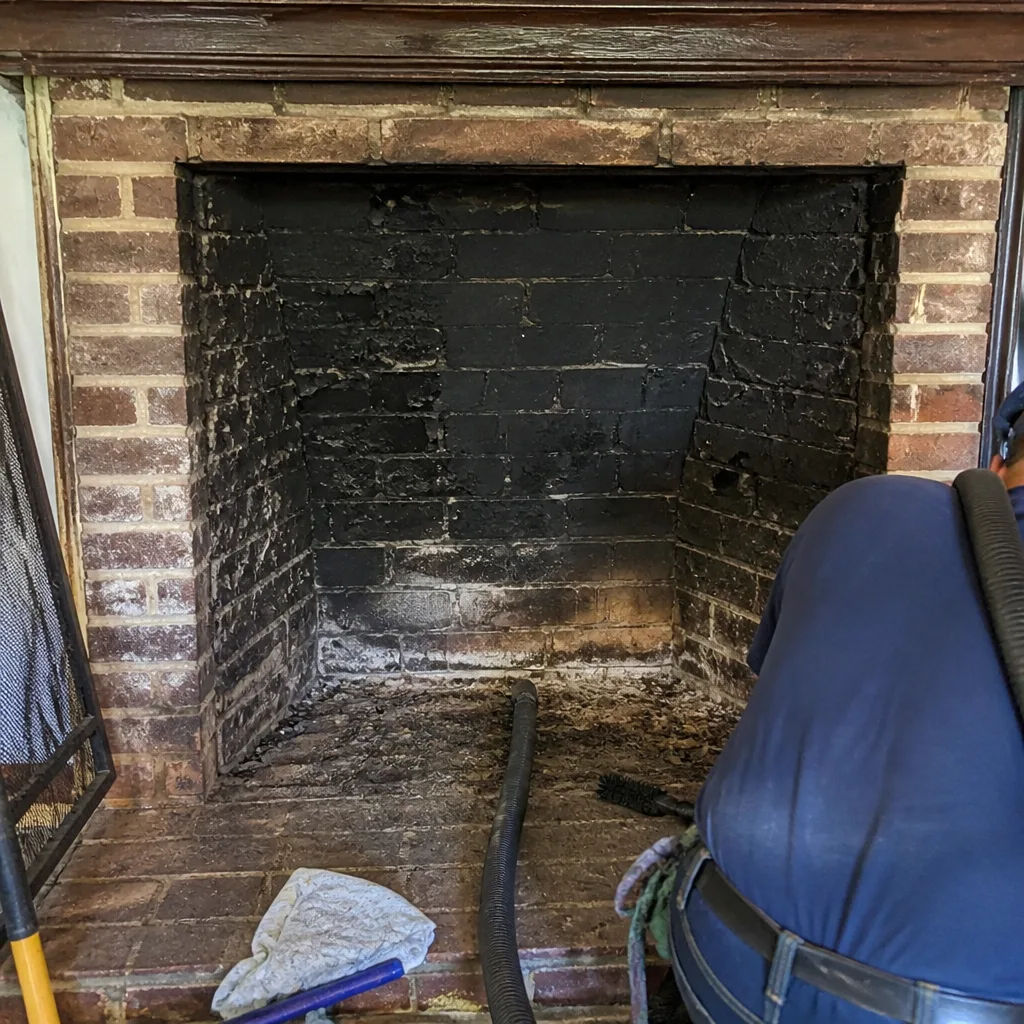
- A visible creosote film on the inside of the firebox or flue throat is a warning. That’s the section you can see. If creosote is visible there, it’s likely present deeper in the flue too.
- Creosote has a distinct smell. It’s an acrid, tarlike smell that’s especially noticeable after rain – see the odor section above for why.
The safe way to know your buildup level is a professional inspection with a camera. Our inspection service documents the system’s condition formally with a camera inspection and photo report, so you can see exactly what’s inside the flue – not just what someone tells you is there. Photo reports are also useful for real estate transactions, insurance documentation, and your own maintenance records.
If we recommend a sweep, it’s based on what the camera shows. If your buildup level is low and safe, we’ll tell you that too – and say when the work can safely wait.
Ground-Level Inspection Points You Can Check Safely
A homeowner can catch most of the early warning signs from the ground, without getting on the roof or reaching into the firebox. This matters: chimney-related falls and burns are largely preventable, so observe from a safe distance and let a technician handle anything above head-height or inside the flue. Here’s what to look for, safely:
- The crown (the top surface around the flue). From the ground with binoculars if needed, the chimney crown should look intact, uncracked, and sloped away from the flue. Visible cracks mean water is entering from above.
- The cap and spark arrestor. The cap should sit securely with no missing panels or rust-through. A missing or damaged cap means rain and animals can enter the flue.
- The masonry up the full height. Look for white staining, flaking brick, crumbling mortar joints, or dark streaks. Note which side of the chimney shows the most wear – it usually tells you where the water is coming from.
- The roofline connection. Check where the chimney meets the roof for gaps, lifting flashing, or dark water stains. This is where most roof-to-chimney leaks start.
- The firebox and damper (from inside the room, without reaching into the flue). Look for rust, white staining on the firebox brick, or a damper that won’t open and close smoothly.
- The smell, after rain. The most reliable low-effort check on this list. If it smells like more than wet brick, note it.
What not to do: don’t climb the roof, don’t reach into the flue, don’t try to clean the chimney with a hand tool from the firebox, and don’t relight a fire to “see if it’s still a problem” if you’ve noticed cracking, concrete damage, or a strong creosote smell. Have it checked first. Our Tallahassee technicians handle the parts that require training, the right tools, and a ladder you don’t want to be on.
Interior Signs: Rust, Streaks, and Damper Trouble
The inside of your chimney tells its own story, and much of what you need to see is visible without getting on the roof. These are the interior warning signs that most often get overlooked by homeowners who’ve only checked the exterior.
Rust on the firebox or the damper is a moisture signal. Dampers are typically steel or cast iron; if the damper is rusting, water is getting into the firebox. The source is usually above – a failed crown, a leaking cap, or a flue without a proper rain cover. A rusting damper that’s ceased up may also be a safety issue, since you can’t close the flue when the fire is out.
Dark streaks, soot smears, or white stains in or around the firebox are all diagnostic. Soot streaks rising up the outside of the firebox suggest combustion gases are escaping somewhere they shouldn’t. White staining inside the firebox usually means moisture, and in Tallahassee that often points to condensation from a gas appliance’s exhaust combined with a flue that isn’t properly sized for the appliance. If the home has a gas log set or gas fireplace, the warning signs are usually interior because the appliance produces moisture as it burns.
Masonry cracks inside the firebox are their own category. A hairline crack in the firebox brick or the fireback is a reason to stop using the fireplace until it’s evaluated. Cracked firebox masonry can allow heat and combustion gases to reach the framing behind the fireplace – a classic setup for a house fire that starts behind a wall and goes undetected until it’s serious.
If any of these interior signs are present, that’s the point to get a professional inspection before the next fire. The condition of the firebox and damper is exactly what a proper inspection is designed to document.
How Often Tallahassee Chimneys Actually Need Attention
The standard guidance from the chimney industry is an annual inspection and a sweep when the buildup level warrants it. That baseline applies to Tallahassee, but the local climate changes what the annual inspection should include.
Here’s how to think about timing:
- Annual inspection: once a year, regardless of how much the fireplace is used. In our humidity-heavy climate, the inspection is as much about moisture and draft as it is about creosote.
- Sweep: when the inspection shows enough buildup to warrant it. Heavy users, anyone burning unseasoned wood, and anyone with restricted draft should be checked more frequently.
- Post-storm inspection: after any major weather event, a quick ground-level look at the crown, cap, and masonry is worth doing. Our summer storms do real wear on chimney caps and crowns.
- New-home inspection: if you’ve recently bought a home, have the chimney inspected before you light the first fire. You have no idea what the previous owner did – or didn’t – maintain.
- After a long gap: if the chimney hasn’t been used or inspected in several years, schedule an inspection before the next burn season. This is the most common scenario we see, and the one most likely to reveal deferred maintenance.
One practical note about scheduling: we’re closed on Saturdays, and our answer to “when can you come out?” is best set up against our dispatch hours, Sunday through Friday, 7am to 7pm. Cooler months are the busiest time for chimney work, so the best window to book an inspection in Tallahassee is usually before the first cold snap – not after it.
Common Mistakes to Avoid
- Waiting for smoke to back up before acting. By the time smoke is entering the room, the problem has already passed several earlier warning stages. Efflorescence, odor, and draft issues show up first.
- Treating milky white stains as decorative or cosmetic. Efflorescence is a moisture diagnosis. In Tallahassee’s humidity, that moisture is often coming from inside the flue, which is why it’s worth investigating rather than scrubbing off.
- Burning green or wet wood to save money. Unseasoned wood produces more creosote, and creosote is the fuel for chimney fires. The small savings on fuel is the most expensive thing you can do to your flue.
- Sealing a chimney before fixing the moisture source. Waterproofing an actively leaking chimney doesn’t fix the source; it traps the moisture and accelerates spalling.
- Skipping the cap because “it doesn’t rain that much.” It rains often enough in Tallahassee that an open flue represents a recurring water intrusion problem. Caps and properly fitted top plates are among the least expensive protective measures you can take.
- Assuming a brick chimney with a clay liner is “self-sealed.” Clay tile cracks with age and moisture. By the time it’s discovered, water has already been reaching the framing.
- Using a general handyman for a diagnosis instead of a specialist. Chimney work is one trade where the details matter: proper draft measurement, flue camera inspection, and correct liner sizing. Materials matter too – we work with professional-grade brands like DuraFlex and HeatShield, not whatever’s on the shelf at the hardware store.
See the difference
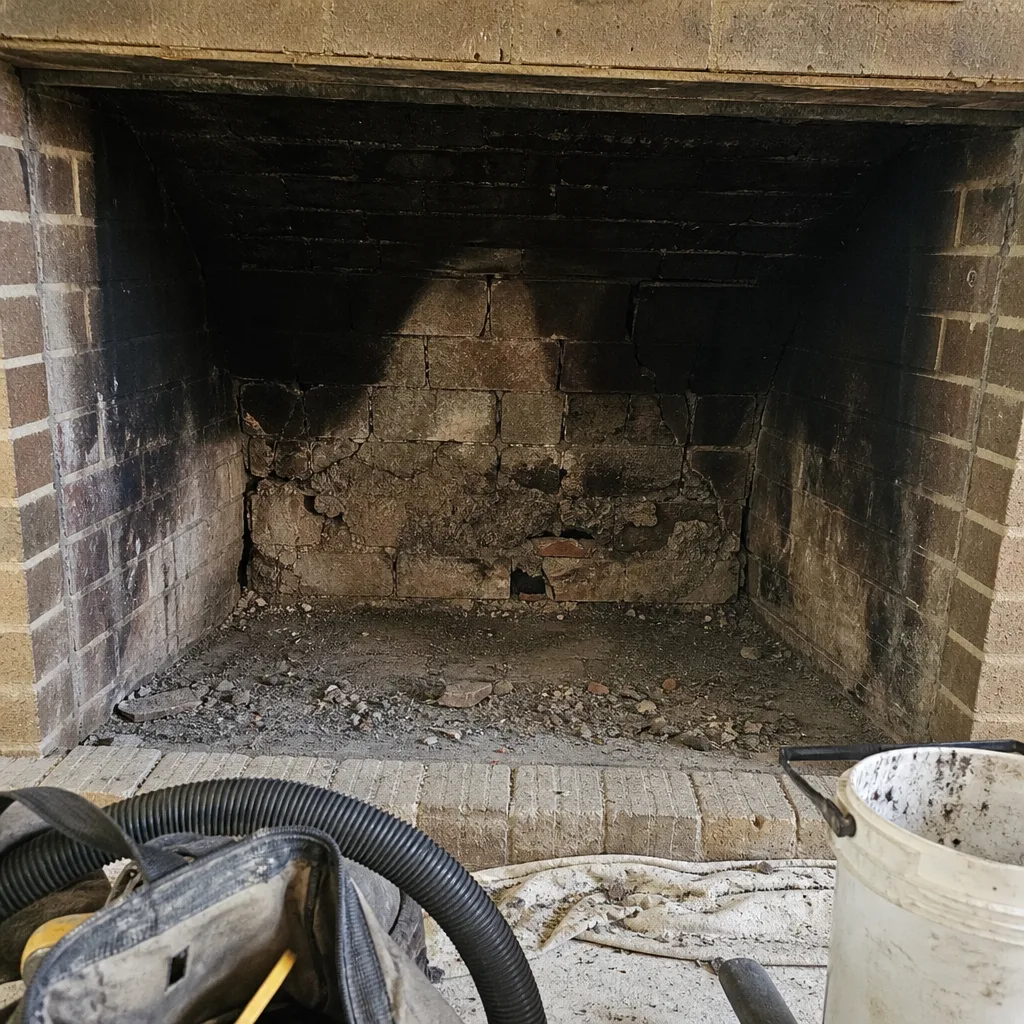 Before
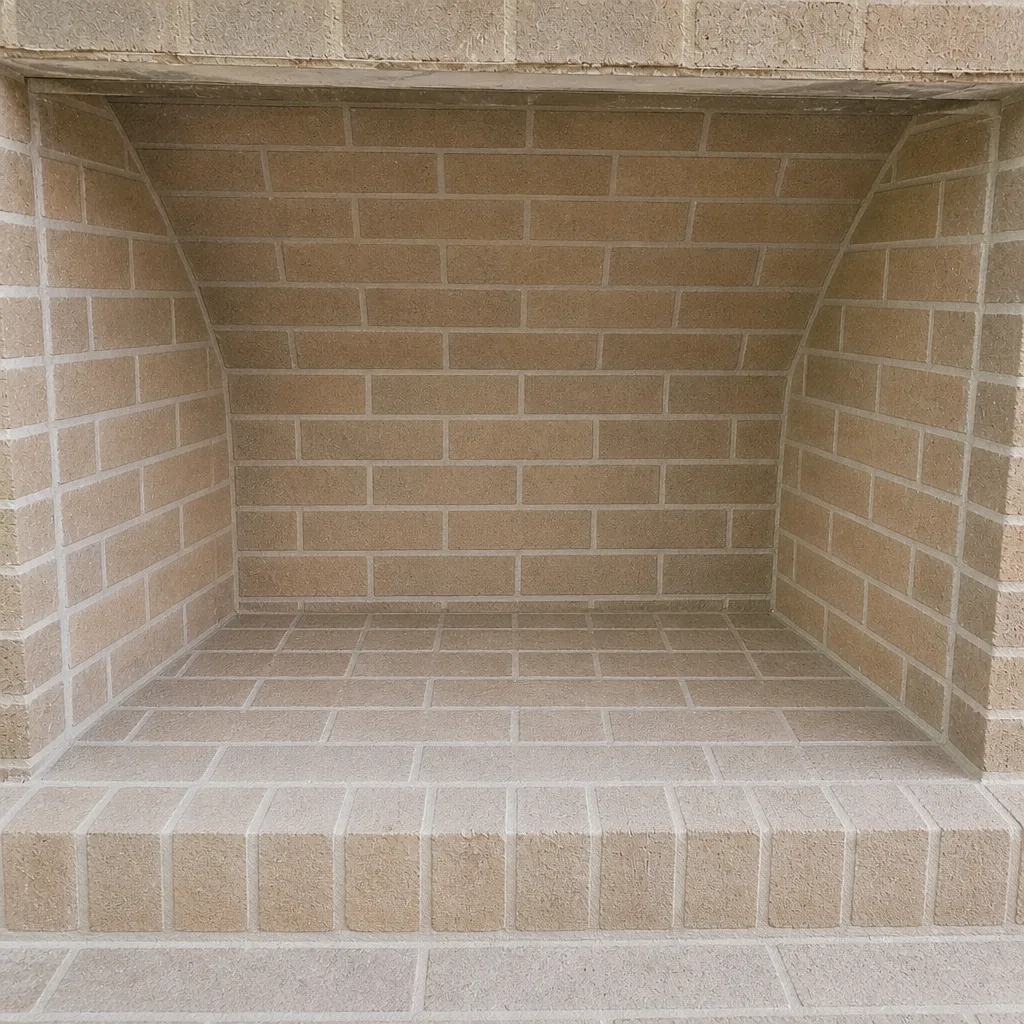 After
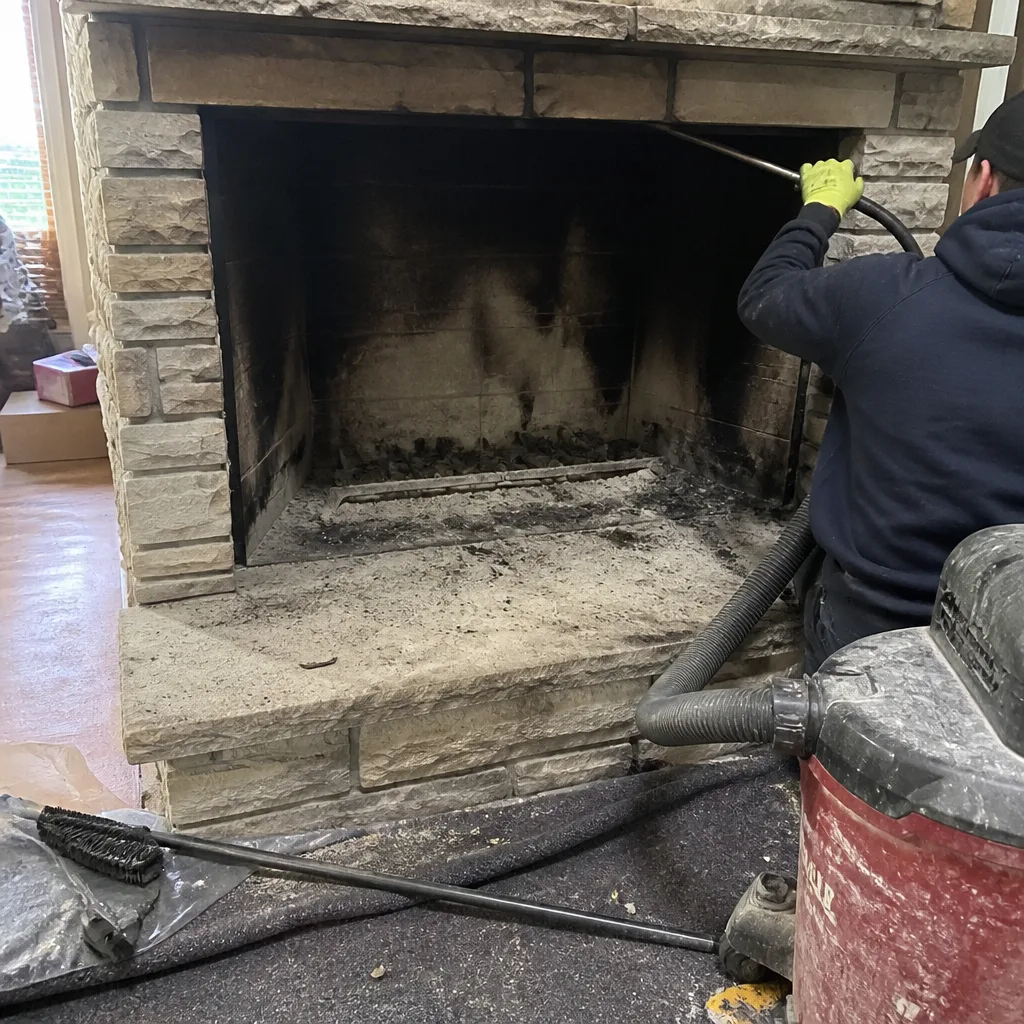 Before
 After
 Before
 After
When to Call a Professional
Some of the checks above belong to you. Others absolutely do not, and it’s better to know the difference. Call a professional if you notice any of the following:
- Efflorescence or spalling that’s spread over a large area of brick
- A persistent acrid or musty smell that returns after rain
- A fire that smokes at startup for more than a few minutes, even with dry wood
- Visible cracks in the firebox, the damper, or the flue liner
- A home with a gas appliance on the chimney where the draft has become unreliable
- A chimney that hasn’t been inspected in over a year, or ever, in a home you’ve recently bought
Tallahassee Chimney Sweep handles sweeping, repair, and inspection as three defined service lines, all in-house, so you don’t have to coordinate between separate trades. Our inspection includes a camera inspection and photo report, and nothing gets recommended without camera evidence you can see for yourself. Our technicians have up to 14 years of experience, and the estimate is free. If we can tell you something can safely wait, we will. Tallahassee Chimney Sweep offers free estimates in Tallahassee – call (855) 904-4110.
Frequently Asked Questions
The price is set per job by the written estimate after we’ve assessed your chimney – there isn’t a single flat rate that fits every flue, since buildup level and accessibility vary. The estimate is free. Call (855) 904-4110 for an exact quote – estimates are free.
White staining is efflorescence – salt drawn out of the masonry as moisture moves through the brick and evaporates. The stain is harmless, but it means water is actively migrating through your chimney. In Tallahassee’s humid climate, that moisture can come from inside the flue as well as from outside. Call (855) 904-4110 for an exact quote – estimates are free.
Not always. A liner is needed only when the existing one is confirmed compromised – cracked, deteriorated, or incorrectly sized – and we won’t tell you otherwise without camera evidence you can see for yourself. When a liner replacement is the right call, we install DuraFlex flexible stainless steel liners, and for minor surface deterioration, HeatShield ceramic resurfacing can restore the flue without a full replacement. Call (855) 904-4110 for an exact quote – estimates are free.
Plan on an annual inspection, and a sweep when the inspection shows enough buildup to warrant it. Heavy users, anyone burning unseasoned wood, and chimneys with restricted draft need attention more frequently. Tallahassee’s humid climate also makes the annual inspection a moisture and draft check, not just a creosote check. Call (855) 904-4110 for an exact quote – estimates are free.
Creosote accumulates and hardens, eventually becoming the fuel for a chimney fire. A small, quiet fire can damage the liner without being heard from inside the house, and present months later as a cracked tile or a failed flue. Skipping the annual inspection also means a moisture problem or draft failure can develop unnoticed. Call (855) 904-4110 for an exact quote – estimates are free.
A musty, basement-like smell after rain means moisture is trapped where it shouldn’t be – usually a leak at the crown or cap, cracked masonry, or condensation on the flue interior. An acrid, tar-like smell instead points to creosote absorbing moisture. Either one is worth a professional look before the next fire. Call (855) 904-4110 for an exact quote – estimates are free.
The Bottom Line
Most Tallahassee chimney problems announce themselves long before the dramatic symptoms – the smoke, the smell, the failed draft. The quiet clues are white staining on brick, flaking masonry, a musty smell after rain, a fire that’s slow to catch, or a rusting damper. If you learn to read those signals, you’re ahead of almost every homeowner on the block. Check what you can from the ground, smell what happens after rain, and let a professional handle anything inside the flue or on the roof. Sweep, repair, and inspection all in-house from one specialist means one call covers every part of your system. We answer 24/7. Fast dispatch from 7am to 7pm, Sunday through Friday.
Tallahassee Chimney Sweep – chimney sweeping, chimney repair, and inspection for Tallahassee homeowners. Before we recommend a repair, we inspect. Before we inspect, we listen. Call (855) 904-4110 for a free estimate.
Written by the team at Tallahassee Chimney Sweep.