
Last updated November 15, 2026
 Sweep & inspection
 Caps & crowns
 Flue relining
 Masonry repair
 Gas fireplace service
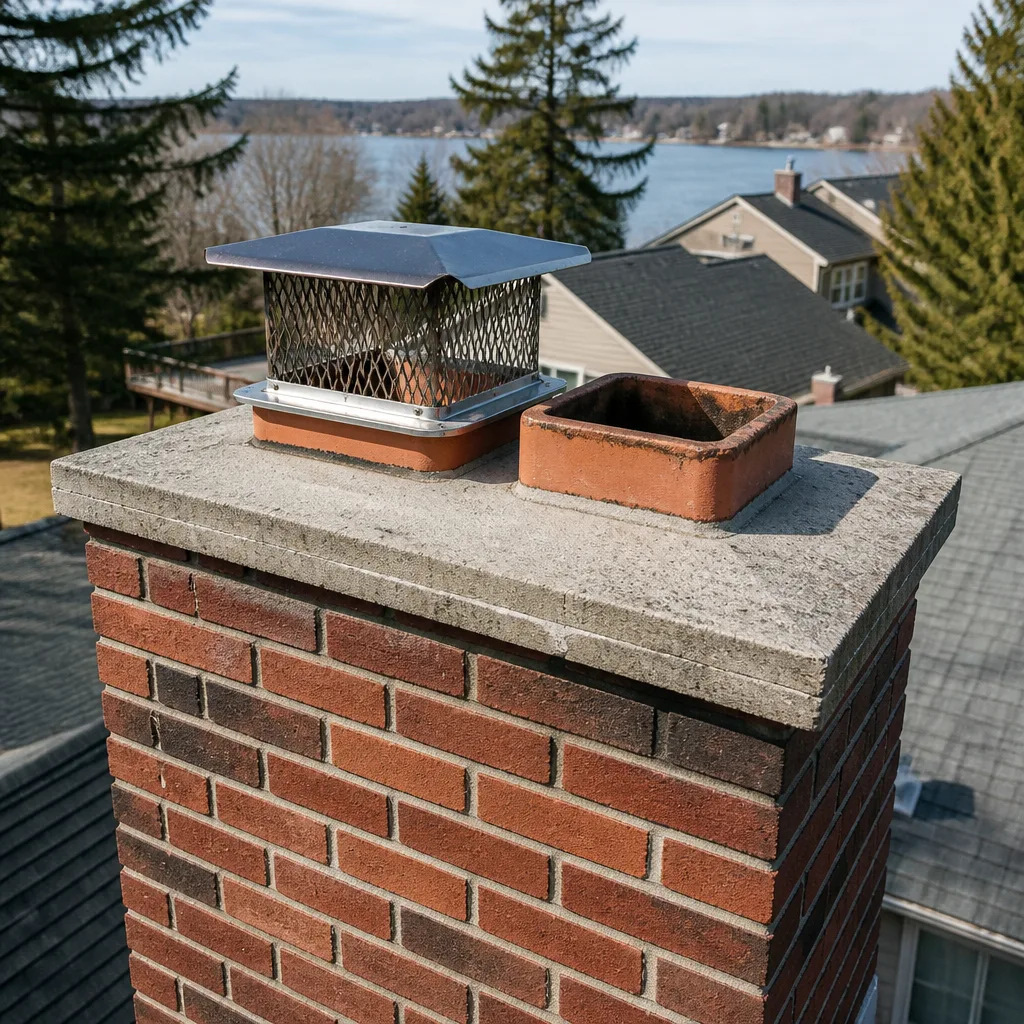
Level 1 sweep and inspection to the NFPA 211 annual standard - flue, crown, cap, and flashing checked and photographed
Chimney sweep logs do not sweep chimneys. They loosen some creosote - which then falls where a brush and vacuum still have to collect it.
Chimney Sweep Troubleshooting in Tallahassee: Common Problems and How to Fix Them
A smoky fireplace isn’t always a dirty chimney. In Tallahassee, it’s often a pressure and humidity problem that no amount of sweeping will fix on its own. Most homeowners assume smoke in the room means creosote buildup, so they book a sweep and expect the problem to disappear. Sometimes it does. But in North Florida’s climate, two quieter forces cause most of the trouble: heavy year-round humidity and long stretches where the fireplace sits unused. This guide maps each common symptom to the root cause driving it, so you know whether you’re looking at a sweep, a repair, or both. We’ll walk through draft problems, masonry damage, mold inside seldom-used flues, damper faults, and the troubleshooting sequence a real inspection follows from cap to firebox.
Quick Answer
Most chimney problems in Tallahassee come down to humidity and infrequent use. Smoke entering the room is usually a draft or negative-pressure issue rather than a blockage, masonry staining and flaking point to moisture damage that may already be structural, and musty odors in a rarely used chimney are often mold rather than soot. A proper sweep screens the whole system (cap, flue, damper, firebox) before recommending any repair, and you should be able to see the camera evidence yourself.
Styles & brands we work with
- Sweep & inspection
- Caps & crowns
- Flue relining
- Masonry repair
- Gas fireplace service
Table of Contents
- Why Smoke Enters the Room: Draft Problems vs. Blockage
- How Tallahassee Humidity Attacks Your Masonry
- Musty Smells: Mold and Mildew in Seldom-Used Chimneys
- Damper Problems: The Most Overlooked Fix
- What a Real Troubleshooting Sequence Looks Like
- Reading the Surface Symptoms: When Damage Turns Structural
- Sweep, Repair, or Both? Matching the Fix to the Cause
Why Smoke Enters the Room: Draft Problems vs. Blockage
Smoke rolling into the room is the most common complaint we troubleshoot, and the cause is split roughly between draft problems and actual blockage. The two feel identical to a homeowner but need completely different fixes. Blockage is physical: a nest, debris, or heavy creosote narrowing the flue so smoke has nowhere to go. Draft is a pressure problem: the chimney can’t pull air up because the house is fighting it. Before assuming you need a sweep, it helps to know which one you’re dealing with.
Modern Tallahassee homes are built tight. Weatherstripping, sealed windows, and insulated attics keep conditioned air in and hot summer air out, which is exactly what you want for your power bill. The side effect is that the house has fewer paths for makeup air. When a fire burns, it pulls air up the flue, and that air has to come from somewhere. In a tightly sealed home, the chimney competes with exhaust fans, dryers, and HVAC returns for the same air, and the fire loses. Smoke gets pushed back into the room instead of up the chimney.
Blockage behaves differently. A capped or partially obstructed flue will draft poorly regardless of what else is running in the house. Signs that point to physical blockage rather than pressure include:
- Smoke that backs up the moment you light a fire, before the house has settled into any routine
- Visible debris, a broken cap, or a screen full of nesting material
- A flue that drafts poorly even with windows cracked and exhaust fans off
- An odor of soot or animal waste, not just musty dampness
Pressure problems tend to show up in patterns. Smoke appears when the kitchen exhaust or dryer runs, on windy days, or in the first minutes before the flue warms. Both causes can be present at once, which is why troubleshooting should start with a full look at the system and not a single guess. If you’re unsure which you have, our chimney sweep starts with that screening so you’re not paying for the wrong fix.
How Tallahassee Humidity Attacks Your Masonry
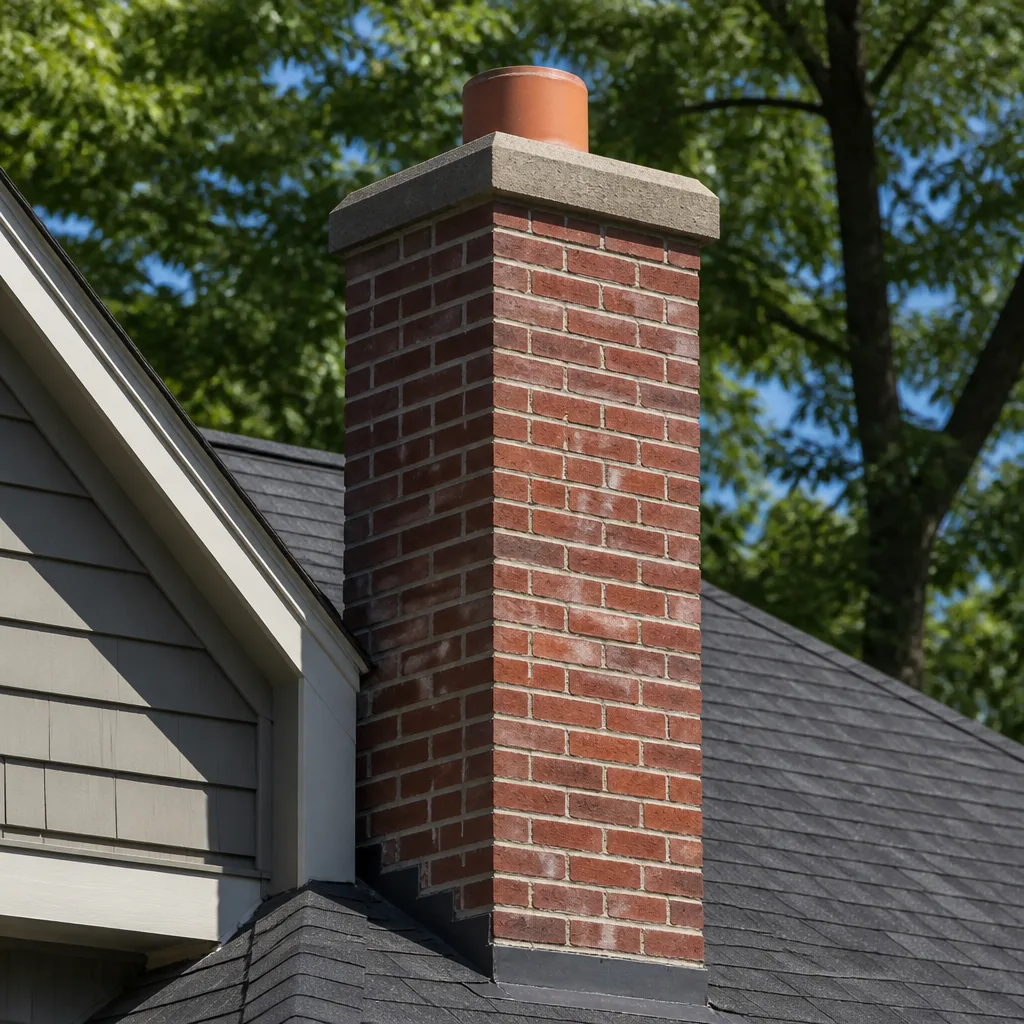
Humidity is the slowest and most expensive chimney problem in this part of North Florida. Tallahassee sits in a humid subtropical climate with long, wet summers and mild winters, and masonry stays damp for stretches that would be unusual almost anywhere else. Brick and mortar are porous. They absorb moisture from the air and from rain driving against the chimney, and they hold it. When that moisture works its way in and out repeatedly, the surface begins to show it: white powdery stains called efflorescence, then flaking and crumbling known as spalling.
The diagnosis hinges on what stage you’re seeing. Efflorescence is the first sign: soluble salts pushed to the surface as moisture moves through the masonry and evaporates. It looks like a white haze or powder and wipes away easily, but it’s telling you water is moving through the brick. Left alone, that same movement eventually forces the surface layer to flake and pop off. That’s spalling, and spalling means the freeze-free but humidity-heavy cycle has already been working on the masonry long enough to break it down.
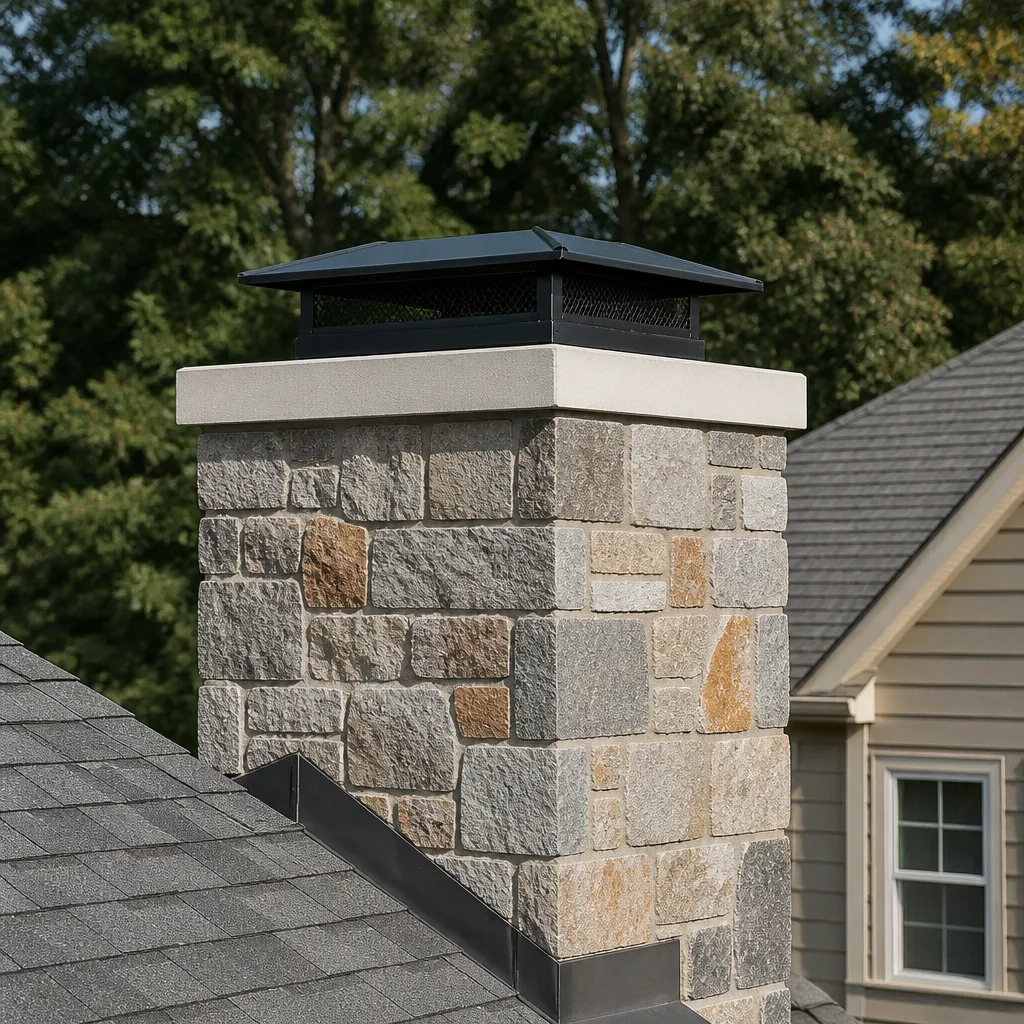
Here’s the practical distinction for a homeowner. Efflorescence and light surface spalling are cosmetic-to-moderate problems. You can often slow them with a proper cap, a sealed crown, and attention to the flashing, all of which keep bulk water out. Spalling that has moved into the mortar joints, or brick faces coming loose in chunks, is a structural warning. At that point the damage isn’t on the surface anymore; the masonry is losing its ability to hold together, and repair is no longer optional. A warped crown, a missing chimney cap, or failed flashing lets water in with every storm, and in Tallahassee’s rainfall that adds up fast.
What we look for during an inspection is where the moisture is entering, not just where it’s showing. The crown, the cap, the flashing where the chimney meets the roof, and the mortar joints themselves are the usual entry points. Fixing the source is what actually stops the cycle. Painting over a stained chimney or sealing the surface without finding the entry point traps the problem rather than solving it, and trapped moisture keeps working on the masonry from the inside.
Musty Smells: Mold and Mildew in Seldom-Used Chimneys
A musty odor coming from a fireplace is often mold or mildew, not leftover soot. In a humid climate, a chimney that sees little use is a damp, dark, closed box with a steady supply of organic material (creosote film, dust, leaves) and no drying airflow. That’s close to an ideal environment for mold growth. The smell gets misread as “old soot smell” so often that homeowners spend years chasing a sweep when the real issue is moisture and stagnation.
The two odors are different once you know what to notice. Soot and creosote carry a sharp, burnt, tarry smell, strongest after a fire and stronger in cold weather. Mold and mildew smell earthy, musty, and damp, and they get worse after rain or in the long humid stretches when the fireplace is idle. If the odor fades in winter and intensifies in summer, mold is the likelier cause. If it spikes every time you burn, creosote is the more likely source, though both can exist in the same flue.
Treating a musty chimney means treating the moisture, not just the smell. Air fresheners and sprays mask the symptom and do nothing about the cause. The useful steps are:
- Get the flue cleaned so the mold has less organic material to feed on.
- Check the cap and crown. A missing or damaged cap lets rain straight into the flue.
- Confirm the damper closes and seals. A damper stuck open lets humid air in year-round.
- Look for water staining inside the firebox and smoke chamber, which points to an entry path above.
- Have the flue inspected for cracks that let moisture migrate into the masonry.
If the flue itself is compromised, cleaning removes the mold but doesn’t fix what keeps it coming back. That’s when resurfacing or relining becomes the real answer, and why we only recommend it when the inspection shows the evidence. A musty odor alone doesn’t justify a liner replacement; a cracked or badly deteriorated flue does.
Damper Problems: The Most Overlooked Fix
Damper problems are the single most overlooked cause of smoke in the room. A damper is the metal plate above the firebox that opens to let smoke rise and closes to keep conditioned air in and humid air out. When it’s working, it’s invisible. When it’s worn, warped, or stuck, it creates exactly the symptoms homeowners blame on a dirty chimney. In a hot, humid climate the damper leads a harder life than most people realize, because it’s exposed to big swings between hot, damp summers and cool, dry winters, and that movement wears on the seal and the pivot over time.
Worn and warped dampers misbehave in a few recognizable ways:
- Stuck open. Smoke drafts fine, but the flue never closes. Humid summer air pours in year-round, feeding musty odors and moisture damage. Homeowners notice the smell and never connect it to the damper.
- Stuck closed or seized. Opening the handle does nothing because the plate won’t budge. Smoke has nowhere to go and rolls into the room immediately.
- Warped or bent. The plate closes but doesn’t seal, so it leaks air and smoke finds gaps at the edges even at full open.
- Loose at the pivot. The plate rattles or drops unevenly, so it never sits flat and can’t be controlled well from the handle.
A quick check tells you a lot. With no fire burning and the firebox cool, open the damper and look up with a flashlight: the plate should move freely and sit flush when closed. If it binds, drops, or leaves a gap along the edge, that’s your smoke source. Caution matters here, because the damper sits above the firebox where the flue begins, and you should never reach up into a flue or try to force a seized damper by hand. That’s work for a trained technician, and it’s one reason a real troubleshooting visit checks the damper as part of the routine rather than sweeping around it.
What a Real Troubleshooting Sequence Looks Like
A proper chimney inspection moves top-down, because the highest point is where water and debris enter and the most useful evidence lives. A sweep that only runs a brush up the flue and leaves can miss everything that matters. Here’s the sequence a thorough job follows, so you know what to expect and what to check:
- Cap and crown. Check the chimney cap for damage, missing screens, and nesting material. Inspect the crown for cracks and the flashing for separation. This is where most water entry starts.
- Flue from the top. Look down the flue for cracks, gaps at the joints, heavy creosote, and missed debris. This is where a compromised liner shows itself.
- Damper and smoke chamber. Confirm the damper opens, closes, and seals. Inspect the smoke chamber for the sharp angles or rough surfaces that cause turbulence and smoke backup.
- Firebox and hearth. Look for cracked firebrick, deteriorated mortar, and gaps that let heat or smoke escape past the firebox.
- Draft test. With the system clean, observe how it drafts and note any pressure-related backup tied to fans or weather.
- Camera inspection and photo report. Document what the camera sees so the homeowner can review the same evidence the technician did.
That last step is the one that separates a real diagnosis from a guess. When we recommend a repair, it’s because the inspection showed the reason, and the photos let you see the same thing. The full sequence is what our chimney repair evaluation covers, so a sweep and a repair call start from the same thorough look at the whole system. Nothing is recommended without camera evidence you can review yourself.
Reading the Surface Symptoms: When Damage Turns Structural
Surface staining is a message, and the message changes as damage moves inward. The useful skill is telling the difference between a chimney that’s weathering and a chimney that’s failing. In our experience across Tallahassee, the deciding factor is usually where the moisture is, not how much staining you can see.
Here’s a practical way to read what you’re looking at:
| Symptom | What It Usually Means | Urgency |
|---|---|---|
| White powdery haze on brick | Efflorescence; moisture moving through masonry | Address the source, monitor |
| Flaking, pitted brick faces | Spalling underway; masonry losing surface integrity | Inspect for entry points soon |
| Crumbling mortar joints | Advanced moisture damage; structural concern | Repair, not cosmetic |
| Chunks of brick coming loose | Structural failure risk | Stop using until inspected |
| Dark water staining inside the flue | Water entering from above | Find the entry path |
| Rust on the damper or firebox | Persistent dampness | Inspect the cap and crown |
The line between cosmetic and structural sits around the mortar joints and the brick faces. A chimney that shows surface haze but solid joints and intact brick can usually be protected before it gets worse. Once the joints crumble and brick faces lift, the masonry is no longer holding itself together the way it should, and that’s a repair that shouldn’t wait. A warped crown or failed flashing letting water in with every storm is often the root; fixing the entry point is what stops the cycle rather than just cleaning up after it.
Sweep, Repair, or Both? Matching the Fix to the Cause
Most homeowners want to know whether they need a sweep or a repair, and the honest answer depends on which root cause is driving the symptom. Get the diagnosis right and the fix is straightforward. Get it wrong and you pay for a cleaning that doesn’t solve the problem, or a repair you didn’t need yet.
The pattern we see most often breaks down like this:
- Smoke on lighting, or backup when fans run. Usually draft and pressure, sometimes blockage. Start with a sweep and a draft check; a repair only comes in if the flue or damper is at fault.
- Damp, musty smell that worsens in summer. Usually moisture, mold, or a damper stuck open. Cleaning alone won’t hold if the cap, crown, or damper keeps letting humidity in.
- White haze to flaking brick. Moisture damage to masonry. The fix is at the entry points (cap, crown, flashing) before it turns structural.
- Crumbling joints or loose brick. Repair, not cleaning. Resurfacing or relining may be needed if the flue interior is compromised.
- Rust, staining, and persistent dampness. Water intrusion. Find and fix the path before anything else.
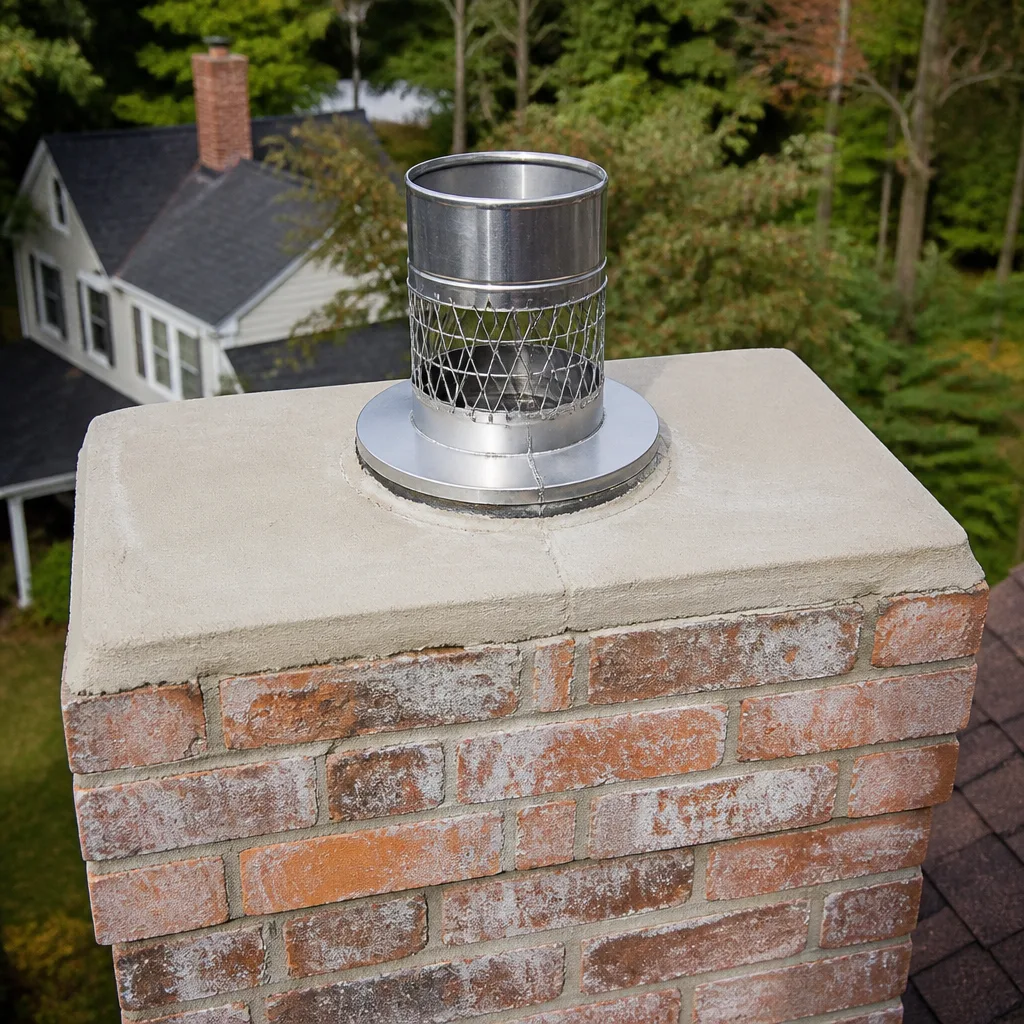
When a flue is genuinely compromised, restoration uses products built for the job. We resurface with HeatShield, a ceramic system designed to restore flue integrity, and reline with DuraFlex flexible stainless systems, the standard for liner upgrades. Caps and venting come from fitting-grade brands like Gelco and Olympia Chimney, not the improvised hardware drawer. If the diagnosis points to a flue problem you’d rather understand than take on faith, the free estimate spells out what the camera showed and what the fix involves, and you can decide from there.
Common Mistakes to Avoid
- Assuming smoke always means a dirty flue. In a tight Tallahassee home, negative pressure from fans and HVAC is a common culprit, and a sweep alone won’t fix it. Troubleshoot draft before you book the wrong service.
- Ignoring a musty smell as “just soot.” In this humidity, an earthy odor that worsens in summer is often mold. Chasing it with air freshener leaves the moisture source untouched.
- Sealing or painting over efflorescence. That traps moisture inside the masonry and pushes the damage deeper. Find the water entry point first; surface sealing without that just hides the problem.
- Never checking the damper. A damper stuck open or warped is the most overlooked cause of both smoke backup and year-round dampness. Open it, look at it, and have a seized one handled by a technician.
- Skipping the cap and crown. A missing cap or cracked crown lets in rain with every Tallahassee storm. It’s the cheapest part of the system to check and one of the most common entry points for damage.
- Forcing a stuck damper or reaching into the flue. The damper and flue sit above a firebox and are no place for hand tools. A trained technician should handle anything seized or hard to operate.
- Accepting a repair recommendation without evidence. If someone can’t show you what the camera saw, don’t authorize a liner or masonry job. A real inspection documents it so you can review it yourself.
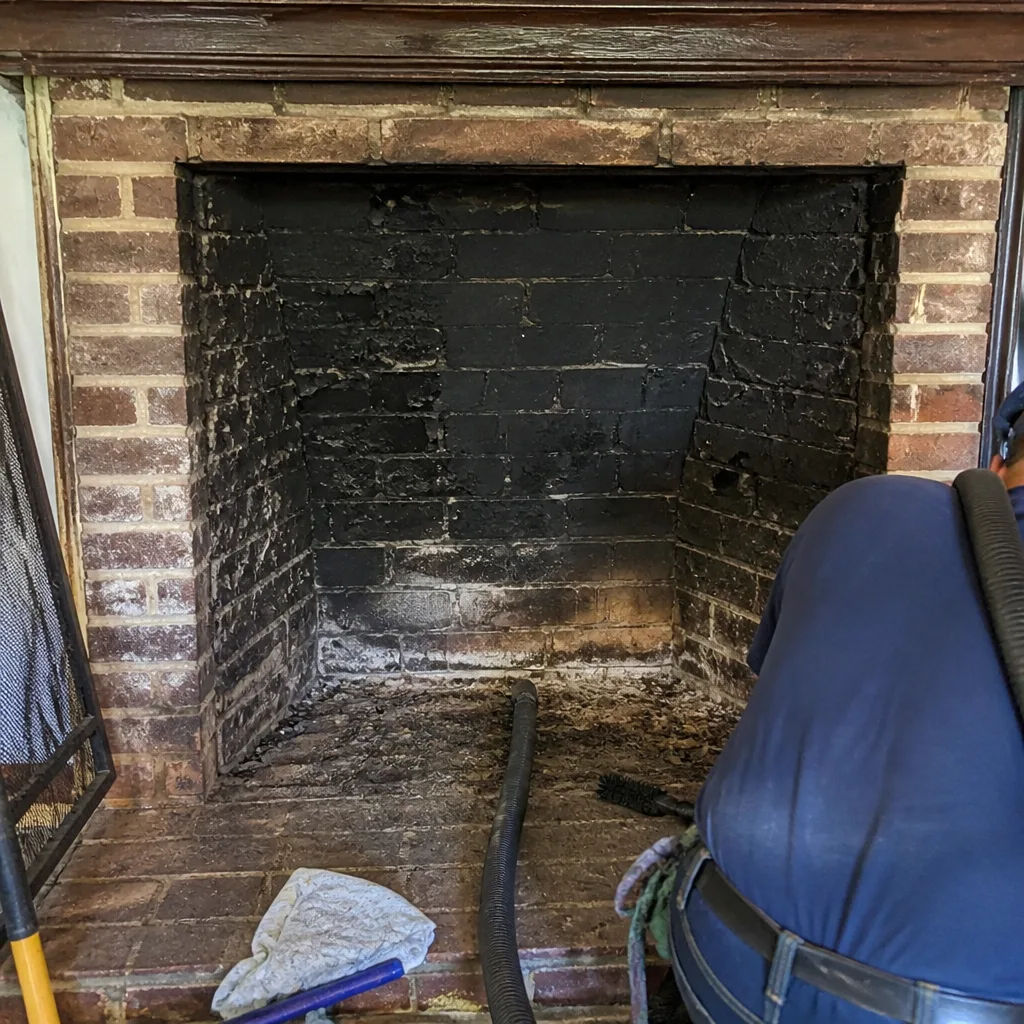
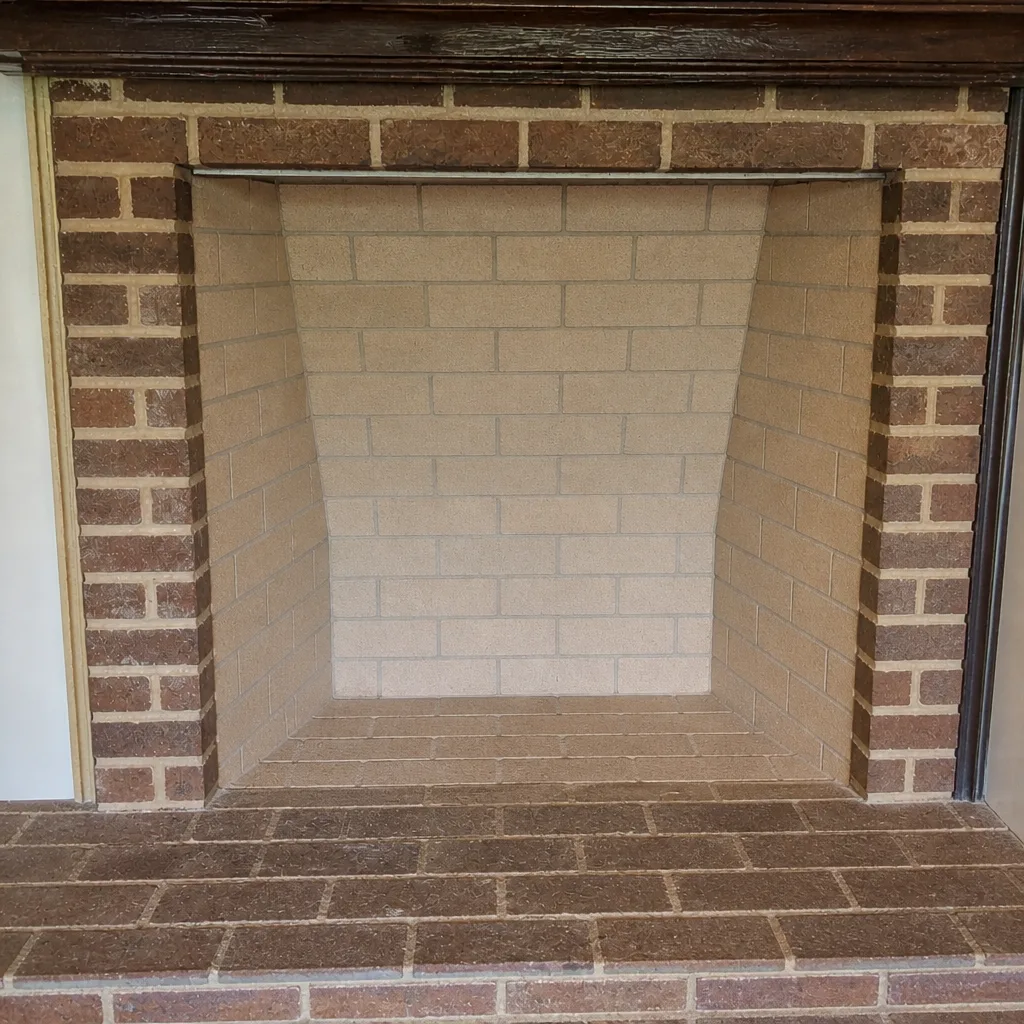
See the difference
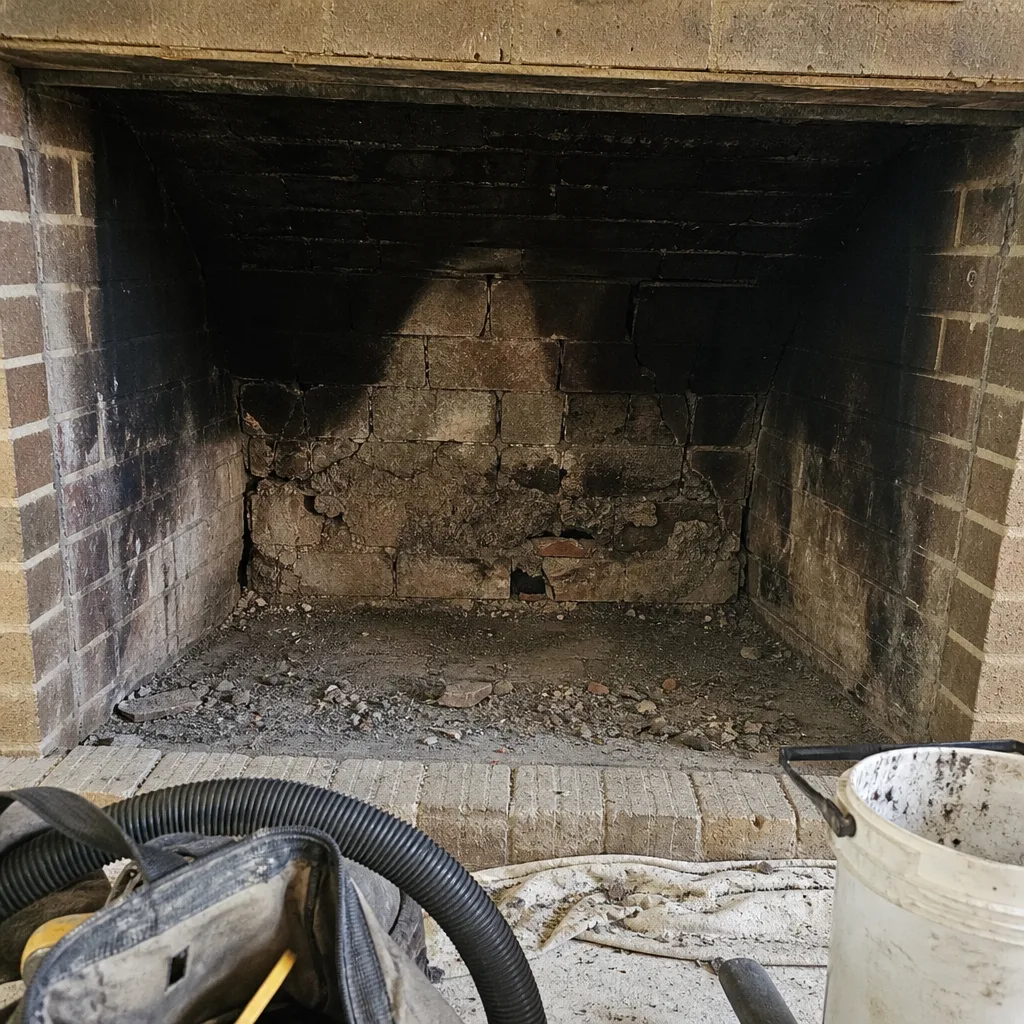 Before
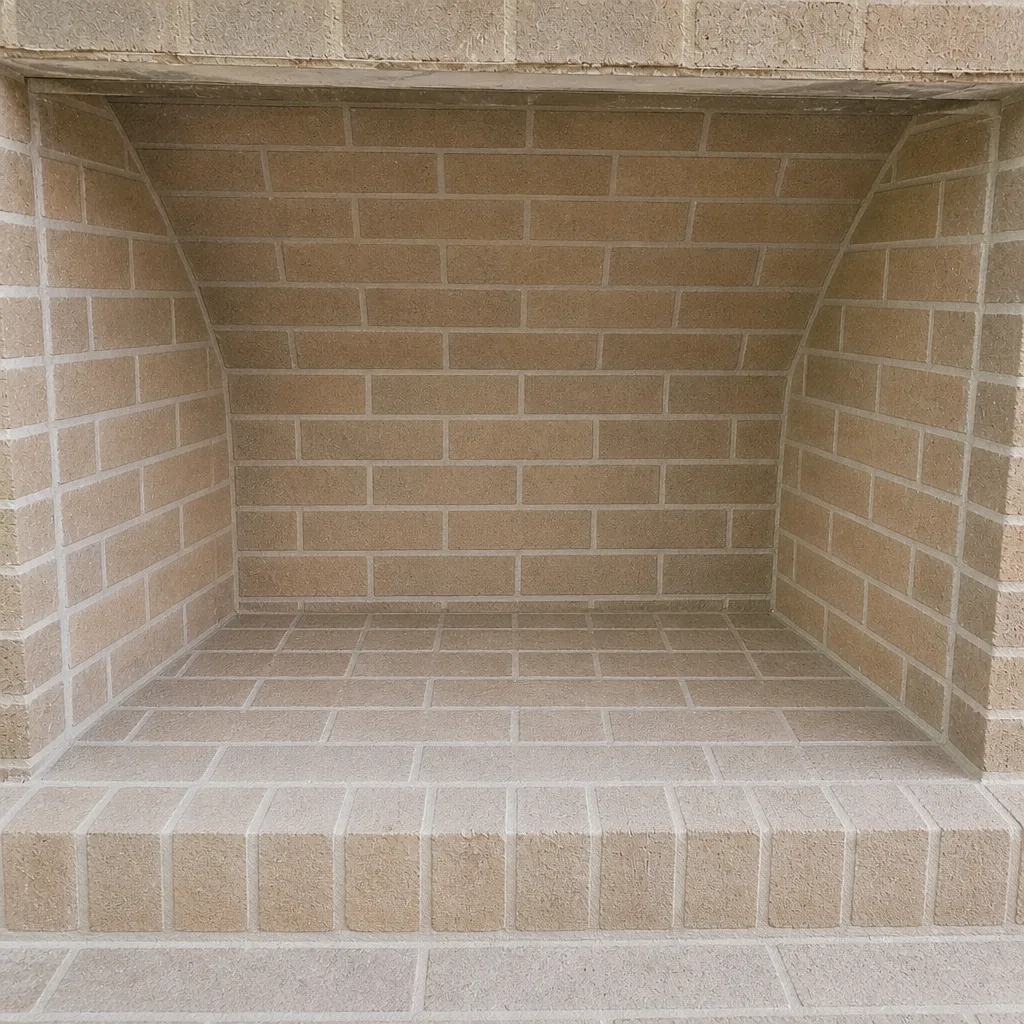 After
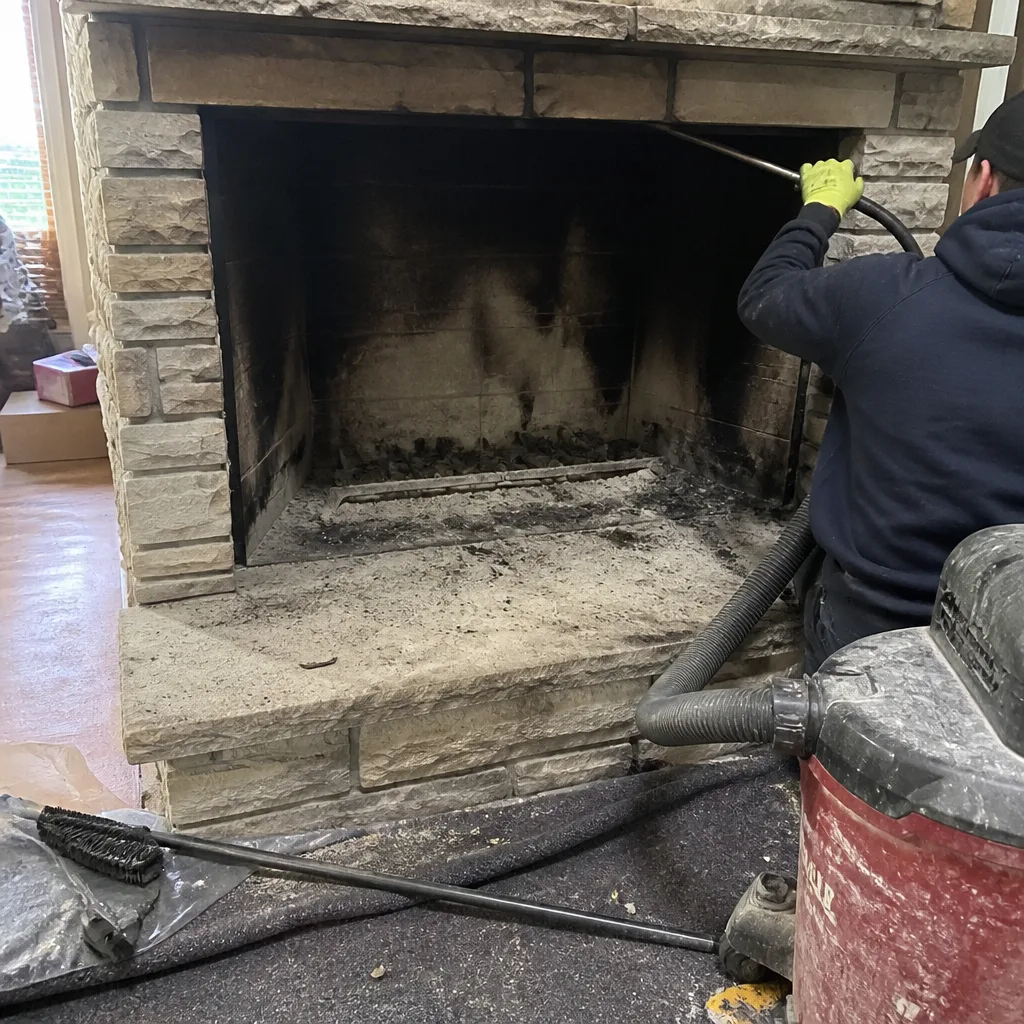 Before
 After
 Before
 After
When to Call a Professional
Call a professional when smoke enters the room repeatedly, when you notice a damp or musty smell that won’t clear, or when you see white haze, flaking brick, or crumbling mortar on the chimney. Call immediately and stop using the fireplace if brick faces are coming loose, if the damper won’t operate, or if the flue shows visible cracking. If you’ve just bought a home in Tallahassee and have no record of the chimney being inspected, book one before the first fire of the season. Tallahassee Chimney Sweep offers free estimates in Tallahassee; call (855) 904-4110. We answer 24/7, with fast dispatch from 7am to 7pm, Sunday through Friday. Our technicians have up to 14 years of experience, and we recommend nothing without evidence you can see.
Frequently Asked Questions
Smoke after a sweep usually points to a draft or negative-pressure problem, not leftover creosote. A clean flue can still back up if exhaust fans, the dryer, or HVAC returns are pulling household air out faster than the chimney can replace it, and tightly sealed homes make this worse. A draft test identifies it, and the fix is often air management and damper control rather than another cleaning. Call (855) 904-4110 for an exact quote; estimates are free.
You need a new liner when the flue interior is genuinely compromised (cracks, gaps, deteriorated clay, or a damaged original liner), and you don’t need one just because a chimney looks old. The way to tell is the camera. Nothing should be recommended without a photo report you can review. If the flue is sound, we say so and tell you when work can wait. Call (855) 904-4110 for an exact quote; estimates are free.
Most wood-burning chimneys should be swept and inspected once a year, or sooner if you burn heavily or notice smoke, odor, or staining. In our humid climate, an annual inspection also catches moisture damage and cap or crown problems before they spread. A seldom-used fireplace still benefits from an annual look, since humidity and dampness cause problems whether or not you’ve had a fire. Call (855) 904-4110 for an exact quote; estimates are free.
A musty smell in an unused chimney is usually mold or mildew, not soot. The damp, dark flue is ideal for mold growth in Tallahassee’s humidity, and the smell often gets worse in summer heat. Cleaning helps, but the real fix is stopping the moisture (a bad cap, a cracked crown, or a damper stuck open). Call (855) 904-4110 for an exact quote; estimates are free.
Skipping maintenance lets small problems grow into expensive ones. Creosote accumulates and raises chimney fire risk, moisture keeps working on the masonry until minor spalling turns structural, and a failing damper lets humid air and smoke where they don’t belong. When we catch these early, the repair is smaller and cheaper. Call (855) 904-4110 for an exact quote; estimates are free.
You can get both from one specialist. Sweeping, repair, and inspection are all in-house here, so you’re not coordinating between a sweeper who won’t repair and a mason who won’t clean. That matters when the diagnosis and the fix are connected (which they usually are). Call (855) 904-4110 for an exact quote; estimates are free.
The Bottom Line
Most chimney trouble in Tallahassee traces to humidity and infrequent use, and the fix depends on which cause is driving your symptom. Smoke in the room is usually draft or damper, musty smells are usually moisture and mold, and chalky or flaking masonry means water is already at work. The way to be sure is a top-down inspection: cap, crown, flue, damper, firebox, with a camera report you can review before any repair is recommended. A sweep, a repair, or both, matched to the actual cause, is what keeps a fireplace safe and working. Tallahassee Chimney Sweep covers all three in-house.
When you’re ready to stop guessing, call (855) 904-4110 for a free estimate. We answer 24/7, with fast dispatch from 7am to 7pm, Sunday through Friday.
Written by the team at Tallahassee Chimney Sweep.